 EN
EN

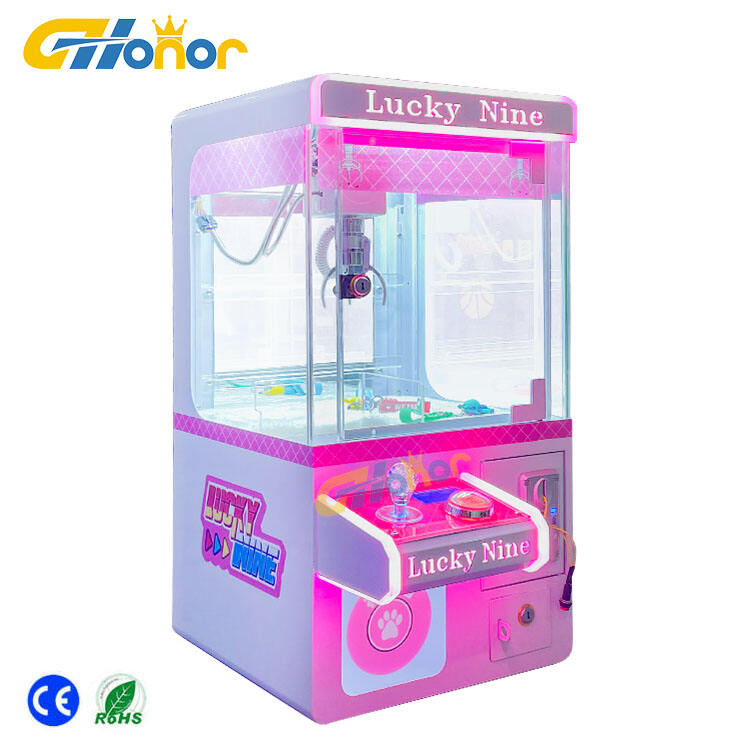
The Psychology Behind Mini Claw Machine Appeal
The Illusion of Control and Its Role in Customer Motivation
Mini claw machines exploit players' tendency to overestimate their influence over outcomes. Despite the machines operating on programmed randomness, 68% of players believe skill determines success (Behavioral Science Journal 2023). This cognitive bias fosters a sense of agency, keeping users engaged through the perception that mastery is achievable with practice.
Intermittent Reinforcement and the Dopamine Reward System
These machines use variable-ratio reinforcement schedules, delivering wins at unpredictable intervals, which trigger dopamine release in the brain. According to research from the University of Minnesota (2024), near-wins activate neural reward pathways 23% more intensely than guaranteed rewards. This biochemical response drives repeated play, even when actual win rates remain low.
Near-Win Effect and Player Persistence in Mini Claw Machines
Machines are calibrated to produce frequent near-successes, such as a claw dropping a prize just short of the chute, to simulate progress. Data shows that after experiencing two consecutive near-wins, 81% of players spend 40% more, driven by the belief that victory is within reach.
Operant Conditioning Principles Behind Repeated Play
Four psychological mechanisms sustain engagement:
- Positive reinforcement — Winning a prize encourages future attempts.
- Negative reinforcement — Players continue to avoid the frustration of failure.
- Fixed-interval rewards — Periodic resets or scheduled boosts create anticipation.
- Secondary reinforcers — Social validation, such as showing off wins, enhances motivation.
Controversy Analysis: Are Mini Claw Machines Gambling by Design?
Mini claw machines might not hand out cash prizes, but they still tap into similar psychological hooks as gambling does. Think about it this way they work on unpredictable rewards, light up our senses, and play tricks on how we think about control. At last year's International Gaming Research Conference, some interesting data came up. About 37 percent of addiction experts there actually labeled these machines as gateway devices for gambling habits. That raises some pretty serious questions about whether companies are intentionally designing these games to hook kids who may not even realize what they're getting into.
Sensory Design: How Sight, Sound, and Movement Hook Players
How lights, sounds, and colors influence customer attraction
Mini claw machines use vibrant color schemes, pulsating LED lights, and rhythmic sound cues to capture attention instantly. Multi-sensory integration increases dwell time by 30% in gaming environments (Toptal, 2024). High-contrast visuals against dark cabinets draw focus to prizes, while synchronized audio-movement feedback loops enhance immersion and encourage interaction.
User interaction dynamics and sensory cues that trigger play
Tactile buttons with responsive click resistance and immediate auditory feedback fulfill players' need for agency. Sensory psychologists refer to this alignment between action and outcome as “haptic congruence.” Even failed attempts feel satisfying due to predictable cause-effect responses, maintaining engagement across multiple plays.
Dynamic turntable displays and visual momentum
Rotating prize platforms leverage peripheral motion to create subconscious urgency, a technique shown to increase play frequency by 25% in arcades. Continuous movement activates natural motion-tracking instincts, while brief pauses during rotation allow strategic positioning of desirable items near retrieval zones.
Strategic placement and environmental integration for maximum visibility
Operators place machines in high-traffic areas, particularly near checkout lines or food courts, where 68% of players report making impulse plays. Elevated, angled displays ensure visibility from multiple angles, creating what retail designers call “ambient enticement”—subtle environmental cues that convert passive observation into active participation.
Prize Strategy: Maximizing Desire, Visibility, and Perceived Value
Prize Visibility and Desirability as Key Psychological Levers
Mini claw machines use selective prominence, placing high-demand items like plush toys and collectibles closest to the glass. Research indicates 68% of players choose based on visible rewards (2023 Arcade Psychology Report), while bright packaging increases attention by 40% compared to neutral tones.
Strategic Prize Placement Techniques to Maximize Engagement
Layered stacking—positioning smaller, lighter prizes atop larger ones—creates perceived accessibility, suggesting easier wins. Diagonal arrangements near the chute opening boost perceived success potential by 22%, encouraging targeted attempts.
Entertainment Value vs. Prize Value: What Truly Motivates Players?
While 61% of frequent players cite gameplay enjoyment as their primary motivator (Consumer Gaming Habits Study 2024), prize value remains critical for initial engagement. Items valued at $5—$10 retail generate three times more plays than generic trinkets, demonstrating that perceived worth drives trial.
Case Study: Successful Prize Configurations in High-Traffic Locations
Entertainment venues combining trending pop culture merchandise with nostalgic items see 19% higher engagement. One mall arcade chain increased daily revenue by 33% after introducing anime-themed plushies alongside 1990s cartoon memorabilia, appealing to both younger demographics and adult collectors.
Rotating Prizes and Limited Editions to Drive Repeat Visits
Weekly prize rotations generate novelty urgency, with 54% of players returning specifically for new arrivals. Seasonal collaborations, like holiday-exclusive designs, boost mid-week traffic by 28% in family-oriented venues, turning casual visits into recurring experiences.
Machine Mechanics: Balancing Challenge, Win Frequency, and Fairness
Payout Rate, Claw Strength, and Perceived Fairness in Mini Claw Machines
Operators calibrate three core elements to balance engagement and profitability:
- Payout rates typically range from 15—25%, influencing how often players win.
- Claw grip strength varies between attempts to prevent pattern recognition.
- Prize weight distribution includes a mix of easy-to-grab and challenging items.
This setup satisfies 73% of players who prioritize entertainment over prizes (Arcade Analytics 2023), though 62% express distrust if mechanics feel excessively rigged.
Claw Machine Variability and Its Impact on Win Frequency
Modern machines use randomized algorithms to adjust claw strength and alignment per play. Studies reveal significant shifts in win probability based on settings:
| Variable | Win Probability Range | Player Perception |
|---|---|---|
| Standard claw strength | 18—22% | "Fair challenge" |
| Reduced strength | 8—12% | "Impossible to win" |
| Boosted strength | 28—35% | "Too easy" |
Periodic difficulty resets and seasonal prize updates help sustain interest without sacrificing long-term margins.
Trend: Adaptive Algorithms in Next-Gen Mini Claw Machines
Emerging systems use machine learning to dynamically adjust gameplay:
- Modulating difficulty based on player demographics
- Increasing win chances after multiple losses
- Optimizing prize configurations using real-time usage data
These adaptive models improve customer retention by 17% compared to static machines (Amusement Tech Journal 2024), offering a personalized experience that feels fairer and more engaging.
Transparency and Trust: How Settings Affect Long-Term Customer Retention
Operators face a trade-off:
- Opaque systems yield 23% higher short-term profits
- Transparent mechanics drive 41% more repeat visits
The growing industry standard recommends clear signage explaining basic odds and mechanics. When players understand probability ranges, satisfaction rises—84% report greater trust and willingness to return (Family Entertainment Survey 2023).
Driving Repeat Engagement: From First Play to Loyal Customer
Player Experience and Psychological Factors Shaping Satisfaction
When the claw gets really close to grabbing something but just misses, people tend to play again much more often than when they fail completely. Studies have found that folks who almost win will try their luck again about 23 percent more times on average. This happens because our brains release little bursts of dopamine when we come so close to winning, making us want to try one more time. Game designers know this well and adjust how strong the claw is and where prizes are placed. They walk a tightrope between making things challenging enough to be interesting but not so hard that players get discouraged and walk away frustrated. Most arcades find this sweet spot where customers feel satisfied after playing several rounds without getting too annoyed at losing all the time.
Customer Motivation to Play Mini Claw Machines in Retail Environments
Compact design allows placement in underused spaces like checkout queues or waiting areas, where 68% of players engage spontaneously (Retail Entertainment Journal 2024). These interactions transform idle moments into revenue-generating opportunities, with retailers noting 15—20% higher foot traffic around well-maintained units due to the inviting, interactive atmosphere they create.
Strategy: Turning Casual Players Into Repeat Customers
Progressive reward systems are most effective for building loyalty. A 2024 gamification study found tiered challenges, such as earning a free play after five attempts, boost monthly return rates by 34%. Additional retention tactics include:
- Digital loyalty cards offering bonus plays
- Exclusive “mystery prizes” visible only to frequent players
- Weekly leaderboards with small merchandise rewards
These strategies appeal to competitive instincts and reinforce the perception of skill-based play, helping shift player mindset from chance-driven spending to goal-oriented entertainment.
FAQ
What makes mini claw machines appealing to spend time and money on?
Mini claw machines play on the illusion of control, intermittent reinforcement, and sensory appeal that keeps players engaged by promising the achievement of mastery or reward with practice.
Are mini claw machines designed to be similar to gambling?
While they do not payout cash prizes, mini claw machines have similar psychological draws to gambling through unpredictable rewards, sensory triggers, and perceived control, which some experts label as gateways to gambling habits.
How do sensory elements affect player engagement on mini claw machines?
Visuals, lights, sounds, and tactile interactions capture attention and provide players with satisfying feedback to maintain engagement, even during unsuccessful attempts.
What strategies are used in prize placement within mini claw machines?
High-demand items are placed near the glass for visibility, while layered stacking and specific spatial arrangements suggest easier wins, enhancing engagement.
Are users aware of the mechanics behind the difficulty of claw machine gameplay?
Often, the randomness and algorithms behind claw strength and engagement strategies are not transparent to users, influencing perceptions of fairness and repeat play interest.
Table of Contents
- The Psychology Behind Mini Claw Machine Appeal
- Sensory Design: How Sight, Sound, and Movement Hook Players
- Prize Strategy: Maximizing Desire, Visibility, and Perceived Value
- Prize Visibility and Desirability as Key Psychological Levers
- Strategic Prize Placement Techniques to Maximize Engagement
- Entertainment Value vs. Prize Value: What Truly Motivates Players?
- Case Study: Successful Prize Configurations in High-Traffic Locations
- Rotating Prizes and Limited Editions to Drive Repeat Visits
- Machine Mechanics: Balancing Challenge, Win Frequency, and Fairness
- Driving Repeat Engagement: From First Play to Loyal Customer
- FAQ