
 EN
EN
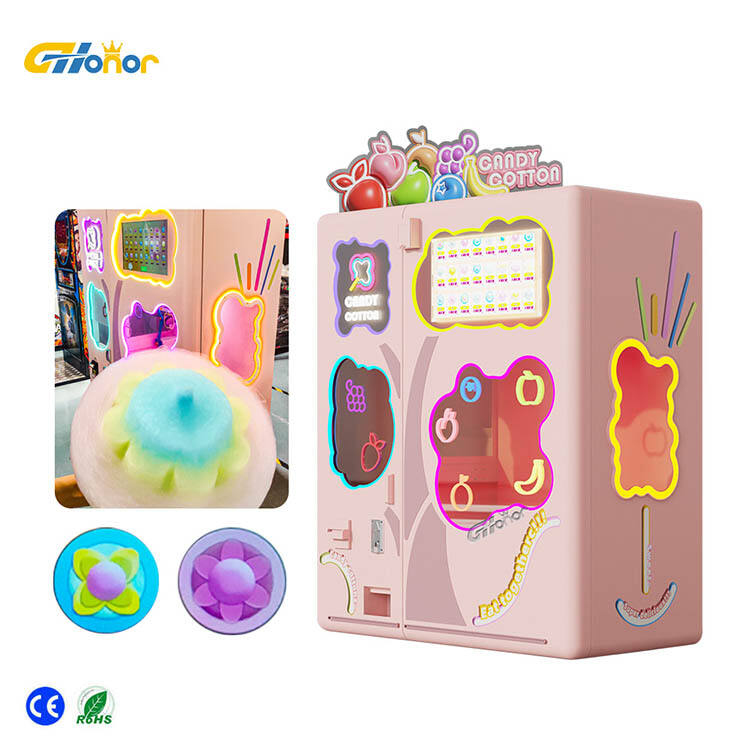
Commercial Cotton Candy Machines: Built for High-Volume Performance
Key Differences Between Commercial and Home Models in Durability and Output
The commercial cotton candy machines built for serious business operations come with some serious hardware upgrades compared to what's available for home use. These professional models have those big stainless steel mixing bowls, powerful motors that can handle continuous operation, and those toughened steel spinner heads that just don't wear out like the ones on regular home machines. Looking at the numbers from Cotton Candy Vending in 2023, these industrial units draw between 1500 and 2000 watts of power. That might seem like a lot, but it makes sense when you consider they can produce anywhere from 2 to 3 fluffy cones every single minute. Compare that to standard home versions which usually max out at around 1000 watts and have all that plastic construction. The difference is huge really, since commercial machines put out three times as much cotton candy as their consumer counterparts.
| Feature | Commercial Models | Home Models |
|---|---|---|
| Construction Materials | 304 stainless steel, steel gears | ABS plastic, aluminum alloys |
| Avg. Power Consumption | 1,800W | 1,000W |
| Continuous Runtime | 8-12 hours | 20-45 minutes |
| Maintenance Cycles | Every 400 operating hours | Every 50 operating hours |
The advanced thermal management system stops sugar from turning into caramel when running for long periods, so these machines can keep going nonstop for 8 hours or more. Looking at the numbers, commercial grade equipment lasts well beyond 25,000 service hours. That's about 30 times what most home appliances manage before breaking down, which typically only get around 500 to 800 hours max according to Red Rabbit Vending stats from last year. Because they last so much longer, businesses actually save money on each serving produced, especially important places where crowds come through constantly like sports arenas and theme parks where downtime means lost revenue.
Home-Use Cotton Candy Machines: Compact, Safe, and Family-Friendly
Essential Features of Home-Use Cotton Candy Machines for Indoor Entertainment
Safety is a big concern for most people when it comes to home cotton candy makers. These machines typically come with heat resistant covers, automatic power off features, and fully enclosed spinning parts that help avoid accidents, especially important if there are kids around. The controls are usually just one button operation, and many components can go right into the dishwasher after making those sweet clouds of spun sugar. Most models today measure between 10 to 14 inches across, so they don't take up much counter space. They also run pretty quietly below 60 decibels, which means they won't ruin conversations during family get togethers. A recent survey from the North American Home Appliance Industry showed that nearly four out of five consumers look specifically for child proof locking systems and bases that won't spill all over the floor when shopping for these fun kitchen gadgets.
Size and Capacity Options for Household and Small Gatherings
Home machines balance convenience and capacity:
- Personal models: Yield 1-2 servings per minute, ideal for families of 2-4
-
Party-sized units: Produce up to 10 servings per hour, suited for birthdays or small events
Most support standard 12-ounce floss sugar bags, with removable bowls holding 4-6 ounces of spun sugar. For easy storage and countertop flexibility, manufacturers recommend models weighing <=5 lbs—a design trend aligned with demand for multi-functional kitchen appliances.
Fully Automatic Vending Cotton Candy Machines: On-Demand Sweet Innovation
How Fully Automatic Cotton Candy Vending Machines Work
Cotton candy machines now make fluffy clouds of sugar in less than 90 seconds thanks to robotic tech. The whole thing starts when those neat little sugar pods get loaded into the machine, so nobody has to keep refilling it manually anymore. Customers pick their flavor on a screen - strawberry is always popular, but blue raspberry gives it that extra kick. Once selected, the machine cranks up to around 320 degrees Fahrenheit inside a shiny stainless steel container, then whips the melted sugar into those delicate threads we all know and love. When ready, the finished product drops straight into clean packaging sleeves without anyone touching it. And let's not forget the convenience factor either. These smart machines accept payments through Apple Pay and other contactless methods while keeping track of stock levels automatically. All these features cut down staffing needs by roughly two thirds compared to old school vending operations.
Deployment in High-Traffic Venues: Malls, Amusement Parks, and Urban Spaces
Fully automated units thrive in high-footfall areas thanks to their 24/7 reliability and compact footprint (average: 2.5’x3’), fitting into spaces as small as 15 sq ft. Their deployment in malls, transit hubs, and campuses has proven highly effective:
| Location Type | Avg. Daily Sales (Units) | Revenue Potential* |
|---|---|---|
| Theme Parks | 85-120 | $255-$360 |
| Transit Hubs | 60-90 | $180-$270 |
| University Campuses | 45-75 | $135-$225 |
Based on $3 per unit pricing (Vending Times 2023 data)
Their adaptability makes them ideal for urban pop-up markets and festival corridors where space and staffing are limited.
Smart Automation Features: Touchless Dispensing and Self-Cleaning Systems
Top-tier models incorporate cutting-edge features to minimize maintenance and maximize hygiene:
- UV-C sterilization between cycles
- IoT-powered predictive maintenance alerts
- Waterless self-cleaning using food-safe air blades
- Multi-language interfaces supporting 12+ dialects
These innovations cut monthly maintenance time by 80% compared to 2019 models (Global Vending Tech Report 2023), improving uptime and operational efficiency.
Case Study: Success of Automated Units in Pop-Up and Public Venues
A major Asian theme park installed eight automated cotton candy machines and reported 92% customer satisfaction, generating $18,000 in monthly revenue with a 15% operational cost margin. The integration of QR-code-driven flavor customization boosted repeat purchases by 34%, highlighting how smart automation enhances both profitability and guest engagement.
Choosing the Right Cotton Candy Machine by Venue and Scale
Matching Machine Type to Venue Size: Small, Medium, and Large-Scale Operations
Selecting the appropriate machine hinges on peak hourly demand and available space. Industry research shows:
- Small venues (<= 100 guests): 1 lb/hour machines with 12" bowls meet light, intermittent demand
- Medium operations (100-500 daily visitors): 2-3 lb/hour models maintain flow during rush periods
- Large facilities (stadiums, festivals): 5+ lb/hour commercial units with continuous-floss technology minimize downtime
A 2023 event industry survey found that 67% of operators upgraded their equipment after underestimating crowd volume, underscoring the importance of accurate capacity planning.
Ideal Machines for Small to Medium Venues
Bakeries, schools putting on events, and food trucks all benefit from energy efficient models that draw around 900 watts or less and get hot in under five minutes flat. The best compact options come with dual voltage support so they work anywhere between 110V and 220V power sources. Most have detachable mixing bowls which makes switching flavors easy without worrying about mixing tastes together accidentally. Safety is taken seriously too with parts certified by NSF and UL standards. These little workhorses can churn out anywhere from 80 to 120 ice cream cones every hour but take up hardly any room on counters. That's why they're so popular in small spaces like community centers or pop-up stands where square footage counts for everything.
Single-Serve and Portable Units for Pop-Ups and Events
Pop-up vendors and event planners increasingly rely on lightweight, portable solutions such as battery-operated machines (6-8 hour runtime) and cart-mounted systems under 30 lbs. Recent advancements include:
- Touchscreen-controlled portioning for consistent 1-oz servings
- Built-in NFC and QR code payment acceptance
- FDA-compliant stainless steel construction
A 2023 consumer study revealed these portable units increased vendor profitability by 23% at festivals due to faster setup, improved throughput, and reduced labor needs.
Frequently Asked Questions
What is the power consumption difference between commercial and home cotton candy machines?
Commercial machines typically consume around 1,800W, whereas home models use about 1,000W.
How long can commercial cotton candy machines operate continuously?
Commercial models can run non-stop for 8-12 hours due to advanced thermal management systems.
Are home cotton candy machines safe for children?
Yes, most home machines include safety features like heat-resistant covers and automatic power-offs.
What are the benefits of fully automatic cotton candy vending machines?
They offer touchless dispensing, fast production, and reduce staffing needs due to automation features like IoT-powered predictive maintenance alerts.
Which machines are suitable for small venues?
For small venues with up to 100 guests, machines with 1 lb/hour capacity and 12" bowls are ideal for handling light demand.
Table of Contents
- Commercial Cotton Candy Machines: Built for High-Volume Performance
- Home-Use Cotton Candy Machines: Compact, Safe, and Family-Friendly
- Fully Automatic Vending Cotton Candy Machines: On-Demand Sweet Innovation
- Choosing the Right Cotton Candy Machine by Venue and Scale
-
Frequently Asked Questions
- What is the power consumption difference between commercial and home cotton candy machines?
- How long can commercial cotton candy machines operate continuously?
- Are home cotton candy machines safe for children?
- What are the benefits of fully automatic cotton candy vending machines?
- Which machines are suitable for small venues?