 EN

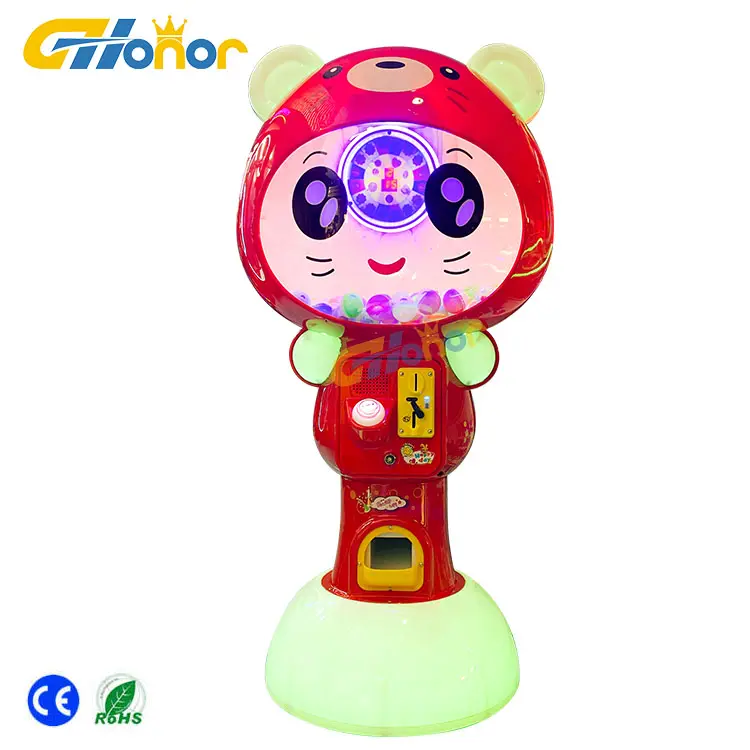
A family entertainment center lives or dies by how many people it pulls through the door and how long they stay. A standalone coin-operated cabinet entertains one player; a mixed installation of an amusement machine across several categories entertains a whole group at once. Toddlers, school-age kids, teenagers, and the adults who brought them all find something to do. That group dynamic keeps a venue busy on weekday afternoons and weekend mornings alike.
What "mixed installation" means for an indoor playground
A true mixed installation places an amusement machine from different families side by side instead of clustering identical units. Soft play and kiddy rides sit near a low toddler zone; a racing simulator, a sport shooting cabinet, and a claw machine form a teen and parent challenge row; an interactive projection wall and VR pod anchor the social corner. The logic is simple: when every age band has a reason to stay, the family books more time and spends more per visit.
Age zoning is the operating discipline behind the layout. Physical separation by height, noise, and supervision need keeps small children away from fast-moving simulators, while teens get space to compete without annoying parents. Good zoning also improves sightlines so parents can watch younger kids from a redemption-game seat. This structural choice lifts both safety and average revenue per square meter without adding floor area.
How age zoning turns casual walk-ins into family groups
Walk-in traffic from a mall often arrives as one parent and one child. Age zoning converts that single pair into a repeat family habit by offering something for siblings and the accompanying adult. A basketball sport cabinet entertains a ten-year-old while a two-year-old rides a kiddy car nearby. The parent stays because the environment feels supervised and calm, not chaotic. Repeat visits grow when every member of the household has a favorite station and a reason to ask for another turn.
Matching the right amusement machine to each age band
Selecting the right amusement machine by age band, not by catalogue page, is the difference between a noisy room and a working floor. Each age group responds to different reward loops: toddlers want movement and bright feedback, teens want challenge and score, adults want social and redemption value. Match the machine type to the loop and the floor earns; mismatch it and the units gather dust between peak hours.
Toddlers and kids — soft play and kiddy rides
For the youngest visitors, the right amusement machine delivers safe, low-speed engagement through soft play structures and kiddy rides. Foam-padded frames, rounded edges, and slow rotation speeds reduce collision risk. These units need constant adult sightlines, so position them where staff and parents naturally stand. A small claw or prize wheel tuned to easy-win settings gives kids an early sense of reward and keeps them in the play zone longer, which extends the whole family's dwell time.
Teens — simulator, sport, and claw challenges
Teenagers chase competition and skill. A racing or shooting simulator with leaderboard scoring creates return motivation; a sport cabinet with basketball or boxing metrics gives measurable progress. Claw and redemption games add the social tension that makes a group linger. Place these mid-floor with seating so friends gather, raising dwell time and cross-play between adjacent machines. A well-tuned amusement machine in this row quickly becomes the busiest corner of the venue.
Adults and parents — redemption, VR, and social play
Adults rarely play alone but join when the format is social. Redemption counters, a 9D VR cinema pod, and interactive projection draw parents into shared play. VR simulators with motion platforms give a premium feel that justifies higher per-play pricing. Including adult-accessible amusement machine units means the accompanying grown-ups spend, not just supervise, which directly improves the venue's profit mix and lifts the average transaction value of every family group.
A real operator scenario from a 350 sqm FEC
Background, problem, and the mixed-layout solution
A 350 sqm family entertainment center in Southeast Asia opened with a single category — mostly claw and redemption cabinets. Foot traffic looked healthy on weekends but collapsed on weekdays, and the average party size stayed at 1.4 people. Observation showed parents dropped one child at a cabinet and left, because nothing held the rest of the family. The space felt like a vending hall rather than a destination.
The operator reworked the floor into three age zones and added an amusement machine mix: a soft-play corner and kiddy rides for toddlers, a simulator and sport row for teens, and a small VR pod plus redemption counter for adults. Aisles were widened for stroller access and sightlines opened between zones. No new square meters were leased; the change was purely a re-layout and a broader equipment mix.
Results and what the dwell-time data showed
Within two months, average party size rose to 2.8 and weekday occupancy doubled during school hours. Dwell time moved from roughly 35 minutes to just over 70 minutes. Repeat-visit rate across a four-week window climbed noticeably because siblings and parents each had a reason to return. Weekday afternoons, once dead, became a steady second peak. The single change protected the multi-age visitor base without extra rent.
Procurement and safety checks that protect multi-age play
Standards, inspection, and maintenance advice
Buyers should verify that imported equipment carries CE marking and that production follows EN 1171 for play structures and ASTM F1918-21 for coin-operated rides. Ask suppliers for test reports and patent documentation before purchase. During inspection, check anchor bolts, emergency stop buttons, and soft-play padding wear. Daily wipe-down of contact surfaces and monthly belt or motor checks keep units safe. Train staff to redirect over-age users away from toddler zones and to monitor simulator harnesses. A free custom layout that pairs each amusement machine with the right age zone prevents costly mis-placement and protects the multi-age visitor experience.
Frequently Asked Questions
Question
What age zones should a family entertainment center plan first?
Answer: Start with three bands: a low toddler and soft-play zone, a teen simulator and sport row, and an adult social-redemption corner. Keep the toddler area nearest the entrance and staff desk for constant supervision, then place noisier simulators farther away. Clear sightlines between zones let one parent watch several children. This sequence protects safety and lets a family group settle quickly, which is the first step toward longer dwell time and higher spend per visit.
Question
Why does mixed installation increase dwell time?
Answer: Mixed installation increases dwell time because it removes single-point boredom that ends a visit early. When a toddler tires of soft play, a sibling moves to a claw machine, and a parent tries a VR pod, the group keeps finding reasons to stay. Adjacent zones create cross-play, so one purchase leads to another. Longer stays raise per-visit spend and improve repeat-visit chance. The venue becomes a destination for the household rather than a quick stop for one child.
Question
How should operators inspect multi-age equipment?
Answer: Inspect every amusement machine on a fixed schedule. Check anchor bolts, emergency stop buttons, and soft-play padding for wear each morning. Test simulator harnesses and motion platforms before opening, and confirm claw grip strength stays in range. Keep a simple log of faults and fixes so patterns surface early. Monthly belt, motor, and sensor checks catch issues before they upset a child. Documented inspection proves a venue meets its safety duty to families.
Question
Can a small venue still attract multi-age visitors?
Answer: Yes, a compact floor can still serve several age bands with careful zoning. A 150 sqm site might pair a soft-play corner for toddlers, two simulators for teens, and a redemption counter for parents along one wall. The key is separation, not size: keep loud machines away from the toddler area and open clear sightlines. A custom layout built around the site area places each unit well. Small venues win by being easy to supervise and quick to circulate.
Question
Where should toddler rides be placed for safety?
Answer: Place toddler rides and soft play near the entrance and the staff desk, where supervision is constant and sightlines are open. Keep this zone away from fast simulators and sport cabinets to avoid noise and collision risk. Use padded flooring and low barriers so a child cannot wander into a teen area. A compact kiddy ride row that staff can see from the counter reduces response time. Good placement is the first safety investment a venue makes.