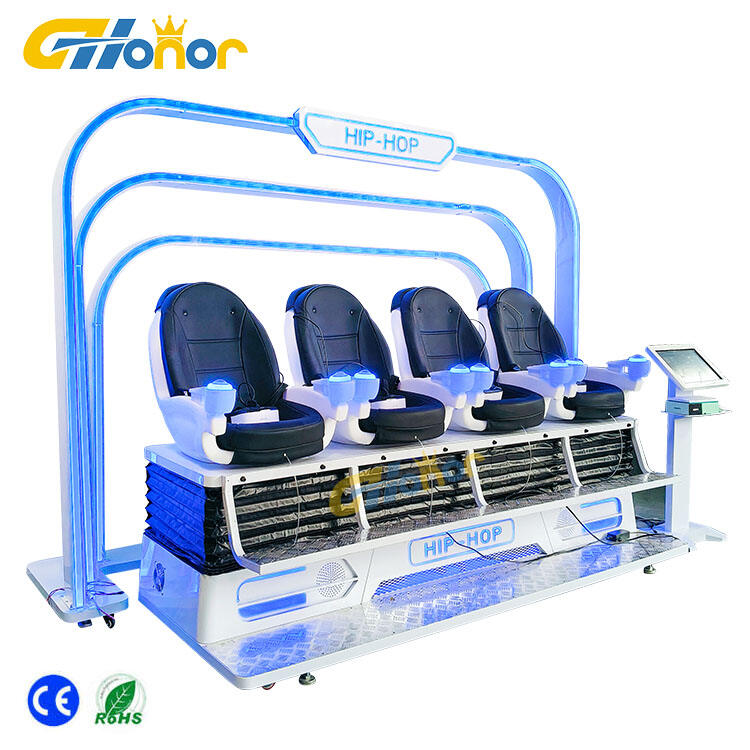
A VR experience refers to the immersive, sensory-rich interaction a user has with a virtual reality environment, characterized by a sense of presence—the feeling of being physically located within the digital space—and the ability to engage with virtual objects, scenarios, or characters through physical movements. This experience is shaped by a combination of visual, auditory, and often tactile stimuli, designed to blur the line between the real world and the virtual one, creating memorable and often emotional engagements. Visual immersion is foundational to a VR experience, delivered through a VR headset that displays high-resolution, 3D visuals with a wide field of view. The headset tracks head movements, ensuring that as the user looks up, down, or around, the virtual environment shifts accordingly—making it feel like a tangible space to explore. Details like realistic textures, lighting, and animations in the virtual environment enhance this effect, whether the user is standing on a virtual mountain top, inside a futuristic spaceship, or in a recreated historical scene. Auditory elements play a critical role in deepening immersion, with spatial audio that makes sounds appear to originate from specific directions within the virtual environment. The rustle of leaves behind, the hum of a machine to the left, or a voice from across a virtual room creates an acoustic landscape that complements the visuals, making the virtual world feel spatially coherent. Physical interaction amplifies the VR experience, with motion controllers or tracked gloves that translate hand and arm movements into actions within the virtual space. Users can reach out to touch a virtual object, pick up a tool, or gesture to communicate, making interactions feel natural and intuitive. Haptic feedback—vibrations, pressure, or even temperature changes—adds tactile sensations, letting users "feel" the weight of a virtual object, the impact of a collision, or the texture of a surface, further grounding the experience in physical sensation. The emotional and cognitive aspects of a VR experience are equally significant. Users often report heightened emotions in VR, whether excitement during a thrilling ride, empathy when experiencing a virtual story from another’s perspective, or curiosity while exploring an unknown environment. This emotional engagement stems from the sense of presence, which makes virtual events feel more immediate and impactful than watching a screen. VR experiences can be short and intense, like a 5-minute roller coaster simulation, or long and exploratory, such as a virtual museum tour. They span genres and purposes, from entertainment and education to therapy and social connection, but all share the goal of transporting users to a different reality—one that feels vivid, interactive, and uniquely their own.
 EN
EN