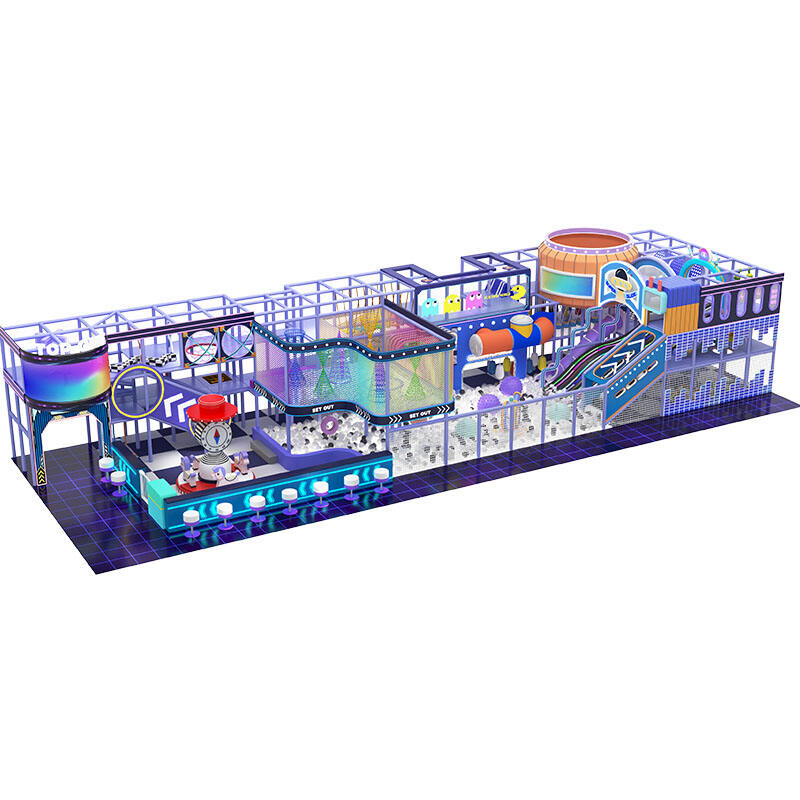
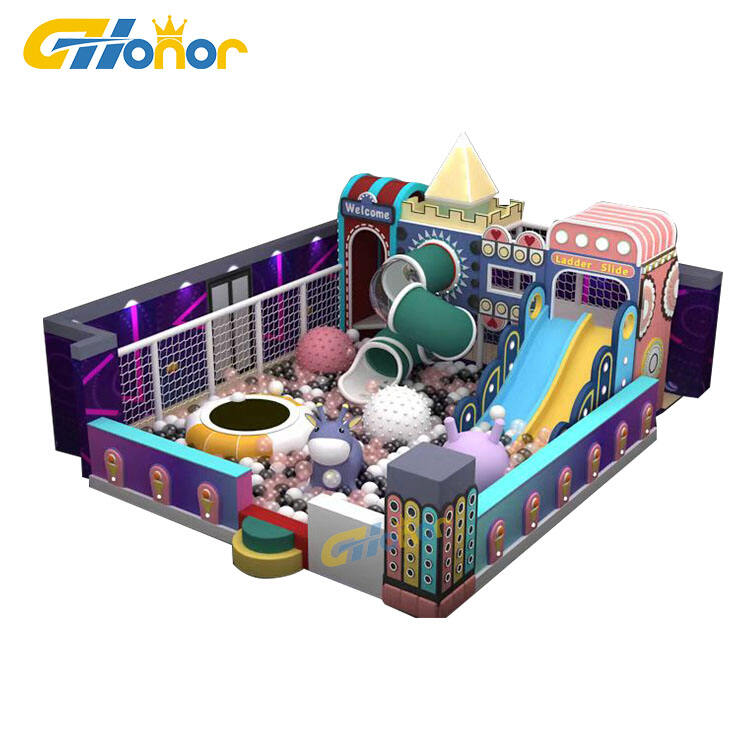
Playground safety encompasses a set of principles, standards, and practices designed to minimize the risk of injury or harm to children using play equipment and spaces, ensuring that playgrounds remain environments where children can explore, play, and develop without unnecessary danger. This multifaceted approach involves equipment design, installation, maintenance, supervision, and user education, addressing potential hazards at every stage. Equipment safety is foundational, with all play structures engineered to meet strict international standards such as ASTM F1487 (U.S.), EN 1176 (Europe), or ISO 8124. These standards specify requirements for materials (non-toxic, flame-resistant, and durable), structural integrity (e.g., weight capacity, stability), and design features (rounded edges to prevent cuts, gaps small enough to avoid entrapment of limbs or heads, and secure fastenings to prevent loosening). Age-appropriate design is critical—toddler equipment must be low to the ground with soft surfaces, while older children’s equipment includes appropriate challenges without excessive height or risk of falls. Safety surfacing is a key element, as falls from equipment are a leading cause of playground injuries. Approved surfacing materials include engineered wood fiber, rubber mulch, poured-in-place rubber, or foam tiles, which absorb impact and reduce the risk of fractures or head injuries. The surfacing must extend beyond the “fall zone” of each piece of equipment (the area beneath and around it where a child might land) and be maintained to ensure consistent thickness and performance. Installation and maintenance are vital to ongoing safety. Proper installation ensures equipment is securely anchored to prevent tipping or movement, with no protruding bolts or sharp edges. Regular inspections—daily checks for obvious hazards, monthly assessments of wear and tear, and annual professional audits—identify issues like rust, loose components, or damaged surfacing, which are repaired promptly. Supervision and user education complement physical safety measures. Clear signage indicates age recommendations, proper use of equipment, and potential risks, while trained supervisors (e.g., teachers, park staff) enforce rules gently, guiding children to play safely and resolve conflicts. By integrating these elements, playground safety creates an environment where children can play freely, and parents or caregivers feel confident in their well-being.
 EN
EN