 EN
EN

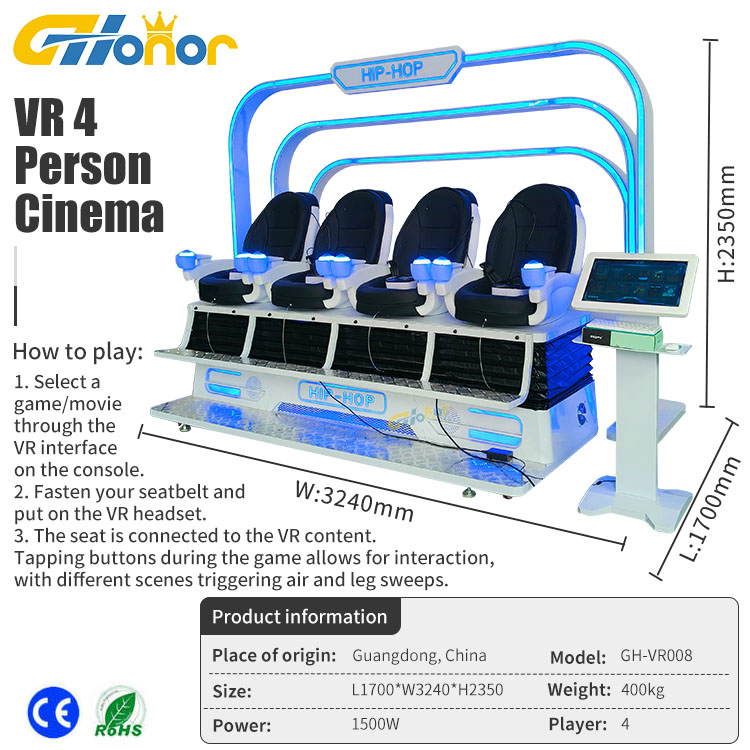
Introduction: Why Social VR Is a Revenue Multiplier
For family entertainment centers (FECs), the shift toward social VR is no longer optional—it is a proven revenue multiplier. Commercial multiplayer VR game machines that offer cooperative quests or competitive arenas tap directly into group dynamics. When friends battle aliens together or race through fantasy worlds, they create shared memories far more powerful than any solo high score. This emotional connection translates into longer visits and frequent return trips.
Industry data shows that multiplayer VR experiences boost average session length by up to 58% compared to single-player units, while replay rates climb as much as 40%. Moreover, the built-in social sharing potential is invaluable: players eagerly post their avatars’ leaderboard standings or collaborative victories, effectively becoming free marketers for your venue. To sustain throughput without losing this magic, many venues now run timed sessions of 8–10 minutes, balancing intense engagement with high guest turnover.
For operators, selecting the right VR game machine with real-time team banter, hand tracking, and synchronized haptics turns the experience into a shared event rather than just another game. [Internal Link: Check our VR game machine product lineup]
Case Study: Omni Arena’s 4-Player Synchronized VR Game Machine
Omni Arena exemplifies how to design a multiplayer VR game machine around group flow. The arena uses a 4-player, free-roam configuration where every participant’s movements are tracked in perfect sync—no lag, no drift. Each player’s headset, body sensors, and controller inputs fuse into a single spatial map, so a teammate’s dodge or a rival’s ambush appears exactly where it should. This technical synchronization eliminates the disorientation that often fractures group experiences, letting squads cooperate on puzzles or compete in team deathmatches.
From an operator’s perspective, this VR game machine minimizes staff overhead: one attendant can guide two groups of four through onboarding and gear checks in under five minutes. The enclosed 20m² footprint keeps guardian boundaries simple, reducing maintenance recalibration. For larger FECs, the predictable 12–15 minute session rhythm means each Omni Arena can serve 80–100 players daily, driving premium pricing per head. The result is a VR game machine that functions as a social anchor attraction, pulling in corporate teams, birthday parties, and friend groups—all of whom consistently spend more per visit than individual walk-ins.
Age-Adaptive Modes: Expanding Your Paying Audience
A truly profitable FEC does not rely on a single blockbuster title. Instead, it curates a library of experiences that respect physiological and cognitive development. Modern VR game machine software uses tiered difficulty systems that automatically adjust simulations, ensuring a preschooler’s gentle adventure does not accidentally place them in a high-velocity dogfight meant for a teenager. This adaptive safety layer is critical for broadening the paying audience from children to grandparents.
Tiered Difficulty & Motion Profiles
Operators maximize throughput by moving away from manual settings toward automatic age-adaptive profiles. The goal is delivering the illusion of risk without physical danger—reducing liability while preserving the adrenaline rush that drives repeat visits. A robust VR game machine achieves this through predefined motion profiles matched to user height and cognitive stage.
| Age Profile | Motion Intensity | Key Safety Feature | Ideal Content Example |
|---|---|---|---|
| Preschool (3–5) | Motion Lite: gentle vibration and minimal gyration | Zero vertical drop simulation; chaperone boundary visualized at 1.5× physical space | Slow-moving underwater explorations or gentle farm interactions |
| Young Kids (6–9) | Moderate: limited tilt and soft haptic feedback | Strict auto-braking on lateral movement; simplified controller mapping | Fantasy quests with exaggerated slow-motion physics |
| Teens (13+) | Full Immersion: 360° rotation and high-fidelity haptics | Standard guardian boundaries with active real-world passthrough warnings | High-speed racing, combat simulators, and complex puzzle escapes |
These profiles do more than improve comfort—they directly influence your liability profile. By preventing young children from experiencing violent virtual drops or rapid acceleration, VR game machines significantly reduce motion sickness and parental complaints. Precise vection control alone can cut simulator sickness incidents by up to 40%, according to research published in the International Journal of Human–Computer Interaction (2022). When a five-year-old safely explores a colorful reef while their teenage sibling battles in zero-gravity just meters away, your center becomes a mandatory weekly destination for the entire household.
Balancing Safety, Simplicity, and Engagement: Lessons from Godzilla Kaiju Wars VR
Successful age-adaptive design hinges on automating complexity. In experiences like Godzilla Kaiju Wars VR, the system actively scales the user’s power ratio and physical demand based on their selected profile. A younger player operating a virtual mech might automatically lock onto targets with a single button press and enjoy a high “assist” damage multiplier—making them feel invincible without requiring dexterous precision. That same game instance, when loaded for an adult profile, removes aim-assist entirely, requiring precise physical dodging and manual weapon systems management.
This layered design ensures one VR game machine installation delivers both a power fantasy to a seven-year-old and a skill-based challenge to their parent. The key lesson for operators: choose platforms where calibration is invisible. The moment a child feels an interface is too confusing—or an adult feels the game is patronizingly easy—the shared social magic breaks and session duration collapses. [Internal Link: Learn more about our age-adaptive VR solutions]
Hardware-Driven Reliability: Enclosed Kiosks vs. Open-Stage Setups
In high-traffic FECs, the physical setup of a VR game machine directly shapes safety and operating costs. Enclosed kiosks use rigid walls to define guardian boundaries, preventing players from stepping beyond the safe zone and reducing strain on tracking sensors and cables. This containment cuts recalibration downtime—and because the environment is self-contained, staff can focus on guest flow rather than constant boundary policing.
Open-stage setups, though more immersive, require dedicated personnel to monitor virtual boundaries, raising labor overhead noticeably. Maintenance patterns also differ sharply: enclosed systems support rapid hygiene routines with quick-swap face interfaces, making it feasible to sanitize a headset in under a minute. Following the industry norm of four backup headsets for every ten in use, enclosed kiosk architectures directly address reliability demands—minimizing unplanned outages and maximizing staff efficiency.
Data from 2024 confirms that 54.3% of the Asia Pacific VR gaming market revenue comes from hardware, as location-based entertainment operators increasingly prioritize durability and easy-to-maintain designs. For your FEC, investing in a durable VR game machine with an enclosed design reduces long-term total cost of ownership. [Internal Link: Explore our enclosed VR machine models]
FAQ
What is the benefit of multiplayer VR game machines?
Multiplayer VR game machines enhance group engagement by tapping into cooperative and competitive dynamics, creating shared memories, extending session lengths, and encouraging social sharing that boosts revenue for family entertainment centers.
How does age-adaptive design in VR game machines work?
Age-adaptive design utilizes tiered difficulty systems and motion profiles suited to the user’s cognitive and physical stage, ensuring both safety and engagement for players ranging from preschoolers to adults.
What are the advantages of enclosed kiosks for VR game machines?
Enclosed kiosks enhance safety by defining guardian boundaries, minimize maintenance costs, simplify hygiene routines, and allow staff to focus on guest management instead of boundary policing, making them ideal for high-traffic venues.
Conclusion
Investing in a multiplayer VR game machine with age-adaptive modes and reliable hardware is not just about adding another attraction—it is about building a social hub that drives repeat visits, increases per-customer spending, and differentiates your FEC from competitors. By prioritizing group engagement, safety, and ease of operation, you create an experience that families will return to week after week.
Ready to upgrade your arcade? [Contact our team] for a customized VR game machine solution tailored to your space and audience.
Table of Contents
- Introduction: Why Social VR Is a Revenue Multiplier
- Case Study: Omni Arena’s 4-Player Synchronized VR Game Machine
- Age-Adaptive Modes: Expanding Your Paying Audience
- Balancing Safety, Simplicity, and Engagement: Lessons from Godzilla Kaiju Wars VR
- Hardware-Driven Reliability: Enclosed Kiosks vs. Open-Stage Setups
- FAQ
- Conclusion