 EN
EN

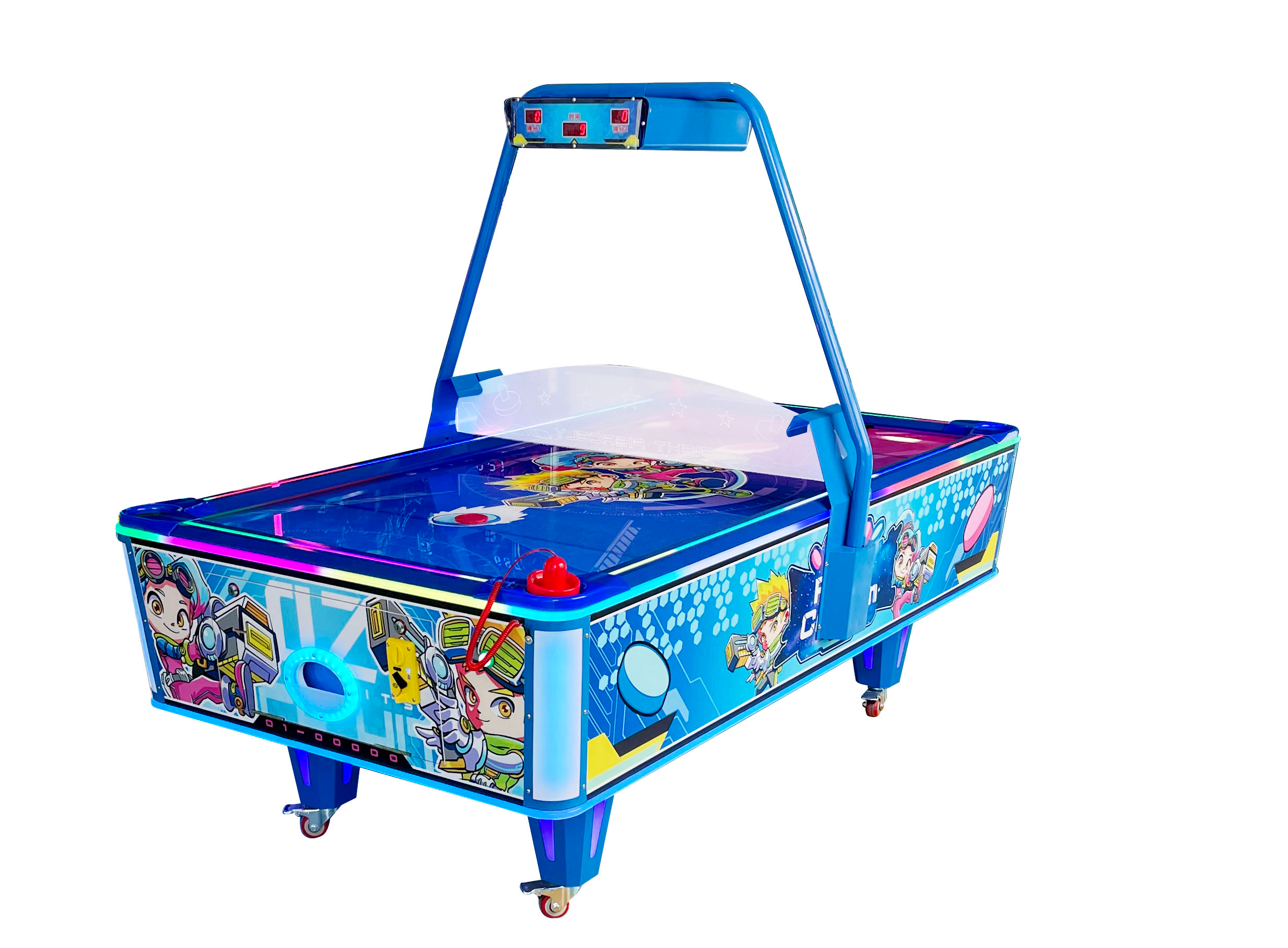
Regulation Dimensions and Tournament-Grade Construction
Exact Regulation Size: 7-Foot Length, 48-Inch Width, and Standard Height for Competitive Air Hockey
Air hockey tables used in tournaments must follow strict size requirements set by the USAA. The playing area needs to be exactly 7 feet long (that's 2.13 meters), 48 inches wide (about 1.22 meters), and sit at a standard height of 32 inches (around 81 centimeters). These measurements aren't just random numbers they were chosen so that when players hit the puck, it bounces off the table in predictable ways no matter where they are competing. Regular home versions come in all sorts of different sizes, which can give some players an unfair edge depending on what table they practice on. Tournament tables take away those advantages completely, making sure everyone competes on equal footing based purely on their skills, reflexes, and game plans. And let's not forget about the height requirement either it makes a big difference for players who need to move quickly side to side while keeping control of their mallets throughout long matches without getting tired out too fast.
Reinforced Steel Frames, Commercial-Grade Laminates, and Vibration-Dampening Bases
The structural integrity just can't be compromised when it comes to tournament play. Steel frames that are reinforced stand up better against warping after all those hits, and commercial grade phenolic laminates really hold their own against scratches while keeping pucks gliding smoothly even after hundreds of hours on the table. The bases designed to dampen vibrations soak up the shocks from those hard bank shots, so there aren't any annoying dead spots where the puck doesn't respond properly no matter if it gets hit near the middle or out towards the edges. Tournament organizers demand this kind of engineering to meet USAA/IGA standards, and honestly, without these features competitions would lose their edge in terms of predictability during those crucial high stakes matches.
Airflow Engineering for True Arcade-Style Air Hockey
High-CFM Blower Systems (100V+ Motors) and Uniform Puck Lift Across the Entire Surface
The real magic behind tournament air hockey tables lies in their industrial strength airflow systems, which bring back that authentic arcade feel everyone remembers from childhood. These tables use high CFM blowers with motors rated over 100 volts, creating around 15 to 25 percent more pressure compared to regular home models. This extra power maintains a consistent 0.5 mm air cushion all across the playing surface, something most consumer grade tables just can't match. What makes these tables special is the thousands of tiny holes drilled with surgical precision – typically between 800 and 1200 per table – that spread the airflow evenly. As a result, pucks zip across at speeds well over 60 miles per hour without any noticeable drag or resistance. When manufacturers cut corners on this calibrated lift system, players start noticing problems during gameplay. Bank shots tend to fizzle out mid-air instead of bouncing predictably, and those tricky angled passes become completely unreliable. For serious competitors, this kind of inconsistency breaks the rhythm needed for top level play.
How Consistent Air Distribution Eliminates Dead Zones and Enables Pro-Level Control
When dead spots form on air hockey tables - those annoying patches where the airflow just isn't strong enough - the puck starts acting all over the place, making fair play nearly impossible and seriously hurting skill progression. Good tournament quality tables fix this problem using special airflow systems that keep the air moving consistently across the whole surface, usually within about 5% variation. What does this mean for actual gameplay? Players can actually pull off tricky moves like accurate bank shots because they know exactly where the puck will go after hitting the wall. They also get better control over slowing down strategically when needed, plus make tiny adjustments while blocking opponents' shots. Over time, regular players develop muscle memory for spinning the puck just right, timing their shot deflections perfectly, and anticipating where ricochets will land. All these physics-based consistencies turn into real advantages during competition, giving skilled players an edge that goes beyond raw talent alone.
Precision Playing Surface and Its Impact on Competitive Air Hockey Performance
Tournament tables have super sturdy, smooth playing surfaces made from materials like competition grade phenolic resin or high pressure laminate (HPL). These surfaces are built to stay flat down to the micron level and create almost no friction when the puck slides across them. Regular home tables tend to warp over time or develop uneven spots, but tournament tables maintain consistent airflow thanks to tiny holes around 0.5 to 1 mm in size. This lets pucks float smoothly even when they're moving faster than 75 miles per hour. Players notice this right away because bank shots behave predictably, there are fewer wild bounces, and the puck glides consistently match after match without losing speed. Skilled players can pull off tricky moves such as bank passes and tight defensive plays with pinpoint accuracy, giving them those crucial fractions of a second that often decide who wins important points in tight games.
Tournament Air Hockey Tables: Key Advantages and Practical Considerations
Durability, Tournament Certification (USAA/IGA), and Long-Term Play Consistency
Tournament tables are built to last and perform at their best, featuring strong steel frames underneath, top quality commercial laminates on the playing surface, and special bases that absorb vibrations so they stay stable even after years of intense play. The USAA/IGA certification means these tables meet tough requirements about how balls bounce back, how air moves around the table during games, and whether the surface stays completely flat throughout matches. This isn't just some fancy sticker on the side though. Real tests have been done by third party experts to check if these tables actually meet those performance standards. When players step onto a certified table, they know what they're getting is consistent every single time.
Space, Weight, and Investment Trade-Offs for Home or Commercial Use
Professional-grade tables require thoughtful integration:
- Space: A minimum 10×7 ft clearance zone is essential for unrestricted player movement and safe puck containment
- Weight: Units often exceed 300 lbs due to structural reinforcement—limiting portability and requiring permanent placement
- Investment: Higher upfront cost reflects certified materials, airflow engineering, and long-term durability; mid-size alternatives offer compromise for space-constrained residential settings
For home use, assess traffic flow and ceiling height before installation. In commercial environments—from arcades to esports lounges—the durability-to-cost ratio delivers strong ROI, as tournament tables retain precise play characteristics through high-usage cycles without degradation.
FAQ
What are the ideal dimensions for a tournament air hockey table?
The ideal dimensions are 7 feet in length, 48 inches in width, and a standard height of 32 inches.
Why is airflow engineering important in tournament air hockey tables?
Airflow engineering ensures consistent puck lift and eliminates dead zones, allowing for pro-level control and predictable gameplay.
What makes tournament tables more durable than home versions?
Tournament tables have reinforced steel frames, commercial-grade laminates, and vibration-dampening bases which enhance their durability.
How do tournament certifications benefit players?
Certifications like USAA/IGA ensure tables meet high performance standards, offering consistent play and fair competition.