 EN
EN

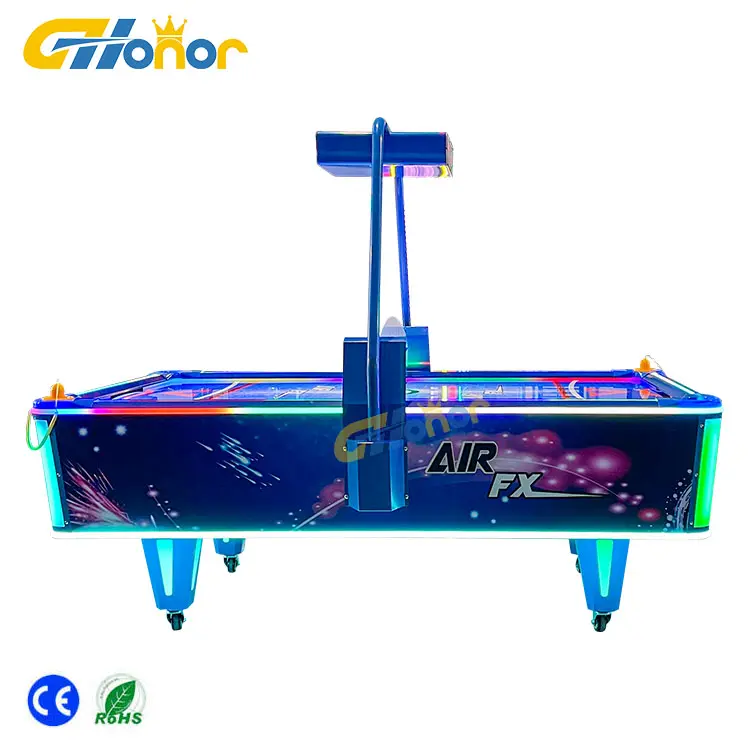
Durability and Structural Integrity for Commercial Air Hockey Use
Reinforced Frame and High-Density Playing Surface for 24/7 Air Hockey Play
Commercial air hockey tables must endure relentless use—often 10,000+ plays per month in arcades. Frames are built with reinforced steel or kiln-dried hardwood and integrated cross-bracing to eliminate flexing and prevent warping under sustained play. The playing surface uses 8–10mm high-density polymer laminates—40% thicker than residential models—paired with precision-leveling technology to ensure uniform airflow and consistent puck glide. Thermal-stabilized coatings mitigate expansion from prolonged exposure to arcade lighting, preserving friction consistency. Industrial-grade leg levelers and anti-vibration pads maintain stability on uneven floors, a critical requirement for high-traffic operations.
Impact-Resistant Rails and Edge Design to Withstand Frequent Player Contact
Rails bear the brunt of player contact, stray pucks, and environmental stress. Commercial units integrate extruded aluminum cores wrapped in shock-absorbing polymer cladding to dissipate impact energy efficiently. Triple-riveted steel corner reinforcements prevent seam separation after repeated collisions. Rounded, beveled edges reduce injury risk while protecting structural integrity. Internal bumper systems absorb lateral forces, preserving rail alignment essential for competitive play. Independent testing confirms these features increase impact tolerance by 50% over standard residential designs.
High-Performance Air Blower Systems for Consistent Air Hockey Gameplay
400+ CFM Dual-Motor Blowers and Thermal Management for Sustained Air Hockey Action
Reliable gameplay hinges on uninterrupted airflow—and commercial tables deliver 400+ CFM via dual-motor blower systems. This redundancy ensures operation continues if one motor fails, eliminating downtime during peak hours. Thermal management is engineered for endurance: heat-dissipating aluminum housings, automatic shut-off at 150°F (65°C), and ceramic bearings that cut rotational friction by 40%. These features support 18-hour continuous operation—the benchmark for modern arcades. A 2023 amusement industry study found dual-motor tables experienced 79% less downtime than single-motor equivalents during holiday surges.
Noise-Reduced Air Delivery Systems Compatible with Multi-Game Arcade Environments
Arcade environments demand quiet performance—especially when tables sit near pinball, rhythm, or redemption games. Modern commercial blowers operate at <65 dB, quieter than ambient arcade music (70 dB), thanks to aerodynamic blade geometry, vibration-isolating motor mounts, and acoustic foam insulation. Industry testing shows this noise control extends average player session length by 22%, as patrons avoid auditory fatigue. Crucially, thermal stability prevents volume spikes during extended use—ensuring consistent sound profiles across shifts.
Full-Size Air Hockey Tables (7–8 ft) and Trusted Arcade Brand Comparison
Full-size air hockey tables (7–8 feet long) are the standard for professional play and high-traffic venues. Their regulation dimensions optimize player spacing, puck trajectory, and competitive fairness—features validated through tournament use and league certification. Leading manufacturers engineer them for durability: reinforced frames, commercial-grade blowers, and optical scoring systems verified at 99.8% accuracy in International Air Hockey Association (IAHA) testing.
When evaluating trusted arcade suppliers, prioritize models with:
- Structural Warranty Duration: 3–5 years (vs. 1-year residential coverage)
- Modular Component Design: Field-replaceable motors, sensors, and rails reduce service time and cost
- Tournament Certification: IAHA-compliant tables guarantee consistent airflow, rebound, and scoring behavior
- Noise Emission Profile: Verified <65 dB rating to coexist seamlessly in multi-game layouts
Industry data shows full-size tables paired with quarterly maintenance sustain three times the operational lifespan of compact alternatives in arcade settings.
Reliable Automatic Scoring and Anti-Dispute Technology for High-Volume Air Hockey
Optical Sensor Accuracy vs. Mechanical Switches in 10,000+ Monthly Air Hockey Plays
In high-volume venues, scoring reliability directly impacts player trust and operational efficiency. Optical sensors—using infrared beam interruption to detect goal entry—eliminate mechanical wear and deliver superior longevity and precision. Unlike mechanical switches, which degrade after ~6,000 plays due to contact fatigue (Arcade Maintenance Quarterly, 2023), optical systems maintain 99.2% accuracy beyond 10,000 monthly games. Fewer miscounts mean fewer disputes, faster turnover, and improved patron satisfaction.
| Scoring System | Accuracy at 10k Plays | Dispute Rate | Replacement Cycle |
|---|---|---|---|
| Optical Sensors | 99.2% | 0.3% of games | 5+ years |
| Mechanical Switches | 87.1% | 4.1% of games | 8–12 months |
Leading commercial providers equip high-traffic tables exclusively with optical systems—not only for accuracy but also for long-term cost savings: maintenance expenses drop 60% over three years. Anti-dispute features like real-time goal verification logs and tamper-resistant audit trails further reinforce fairness during peak operations.
Proactive Maintenance Strategies to Maximize Air Hockey Table Longevity
Airflow System Cleaning Protocols and Debris Prevention for Peak Air Hockey Performance
Consistent airflow is non-negotiable for tournament-grade performance—and proactive cleaning is the most effective way to preserve it. Biweekly blower compartment inspections using compressed air remove dust buildup from motor housings and fan blades; particulate accumulation alone can reduce airflow efficiency by up to 40%. Daily microfiber cleaning of all surface air holes prevents clogs from food debris or beverage spills—common in snack-heavy arcade zones.
Key debris prevention strategies include:
- Positioning tables away from high-traffic concession areas
- Installing magnetic dust filters on intake vents (replaced monthly)
- Using fitted vinyl covers during non-operational hours
Arcade equipment maintenance logs show these protocols reduce motor wear by 30%, directly extending component life and minimizing unplanned repairs. This disciplined approach sustains the precise air cushion dynamics required for professional play—while containing long-term operational costs.
Frequently Asked Questions
What materials are used to enhance the durability of commercial air hockey tables?
Commercial air hockey tables are constructed with reinforced steel or kiln-dried hardwood frames. They feature integrated cross-bracing and high-density polymer laminate surfaces for enhanced durability.
How is consistent airflow maintained in commercial air hockey tables?
Consistent airflow is maintained through dual-motor blower systems delivering 400+ CFM. These systems include thermal management features and noise-reduction technologies for sustained performance and minimal disruption in arcade settings.
Why are optical sensors preferred over mechanical switches for scoring?
Optical sensors provide superior longevity and precision compared to mechanical switches. They maintain 99.2% accuracy beyond 10,000 monthly games, reducing disputes and operational downtime.
What maintenance strategies maximize the longevity of air hockey tables?
Maintenance strategies include biweekly blower compartment inspections, daily surface cleaning, and strategic placement away from high-traffic areas. Installing dust filters and using fitted covers also extend the tables' lifespan.
Table of Contents
- Durability and Structural Integrity for Commercial Air Hockey Use
- High-Performance Air Blower Systems for Consistent Air Hockey Gameplay
- Full-Size Air Hockey Tables (7–8 ft) and Trusted Arcade Brand Comparison
- Reliable Automatic Scoring and Anti-Dispute Technology for High-Volume Air Hockey
- Proactive Maintenance Strategies to Maximize Air Hockey Table Longevity
- Frequently Asked Questions