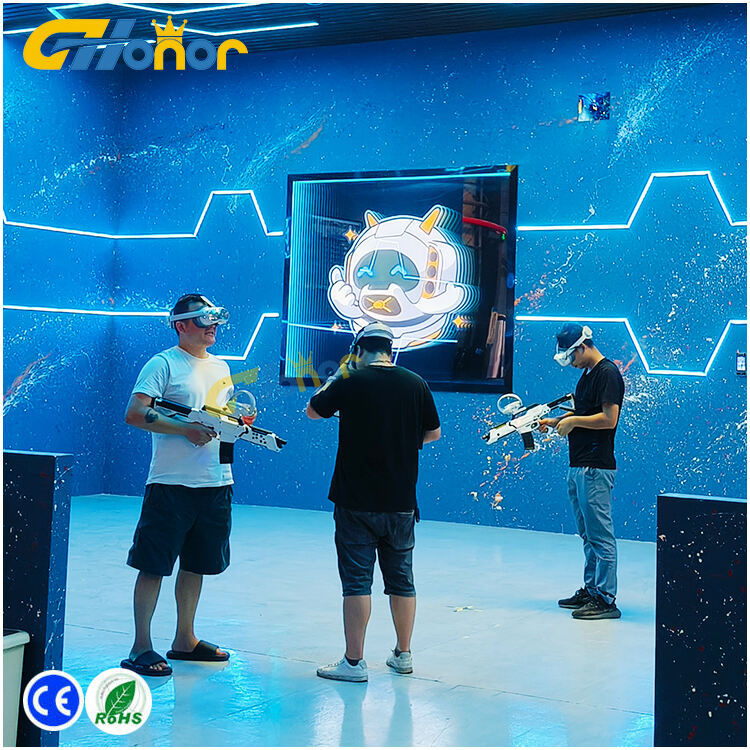
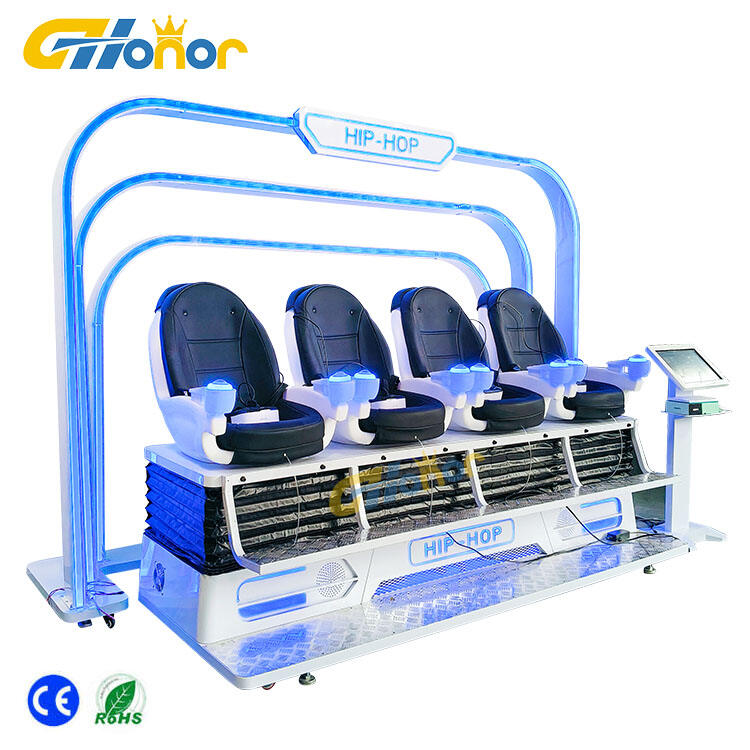
A VR simulator is a specialized system that uses virtual reality technology to replicate real-world environments, scenarios, or experiences in a controlled, virtual setting, allowing users to interact with and learn from these simulations in a safe, cost-effective manner. These simulators are used across various fields, including entertainment, education, training, healthcare, and aviation, offering immersive, realistic experiences that bridge the gap between theory and practice. At its core, a VR simulator consists of several key components: a high-resolution VR headset that displays the virtual environment with stereoscopic 3D visuals and tracks head movements to provide a natural, 360-degree view; motion tracking systems that capture the user’s physical movements (hand gestures, body positions, or even full-body motion) and translate them into actions within the virtual space; and often, physical feedback mechanisms such as haptic gloves, motion platforms, or force-feedback controllers that simulate touch, resistance, or movement, enhancing the sense of realism. In entertainment, VR simulators create thrilling experiences like roller coaster rides, space exploration, or extreme sports, where users feel the physical sensations (tilting, acceleration, vibrations) of the activity without any real-world risk. For example, a VR flight simulator might use a motion platform that tilts and shakes to mimic the feel of takeoff and turbulence, while the headset displays a detailed virtual cockpit and sky. In professional training, VR simulators are invaluable for high-risk or expensive activities. Pilots practice flying in virtual cockpits that replicate weather emergencies or mechanical failures; surgeons train on virtual patients to master new techniques before operating on real people; and firefighters learn to navigate burning buildings without exposure to danger. These simulators allow repeated practice, immediate feedback, and customization of scenarios to target specific skills, improving learning outcomes and reducing training costs. VR simulators can also replicate rare or inaccessible environments, such as deep-sea ecosystems for marine biology students, historical events for educational purposes, or distant planets for scientific visualization. They often include software that tracks user performance, generating data on actions, decisions, and outcomes for analysis—whether to improve a trainee’s technique or refine the simulator’s realism. Built with durability in mind, especially in commercial or professional settings, VR simulators use robust hardware to withstand frequent use and deliver consistent performance. They are continuously evolving with advances in VR technology, offering higher resolution, more accurate tracking, and more sophisticated physical feedback to create increasingly realistic and useful simulations.
 EN
EN