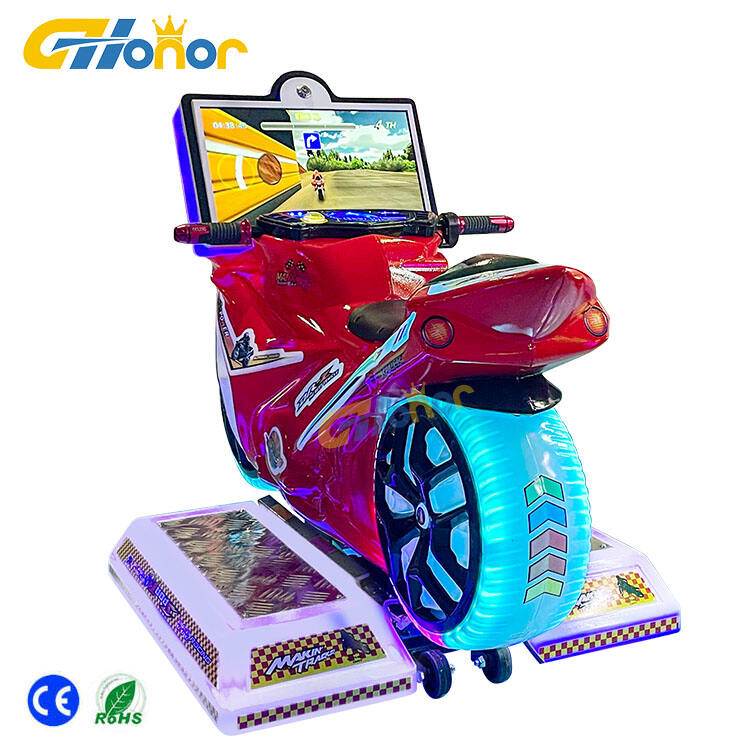
A racing game simulator is a specialized type of racing video game or hardware setup designed to replicate the experience of driving a real race car with exceptional accuracy, focusing on realistic physics, vehicle dynamics, and environmental details to appeal to serious racing enthusiasts, professional drivers, and those seeking an immersive training tool. These simulators bridge the gap between virtual and real racing, offering a level of precision and authenticity unmatched by casual racing games. At the core of a racing game simulator is a sophisticated physics engine that models every aspect of vehicle behavior, including tire grip, suspension movement, aerodynamic forces, fuel consumption, and even the impact of weather on track conditions. This means cars handle differently based on their weight, power, and setup, requiring players to learn braking points, racing lines, and throttle control with the same precision as real drivers. Tracks are recreated with meticulous accuracy, using laser scanning to replicate every bump, curve, and elevation change of real-world circuits—from the legendary Nürburgring Nordschleife to the tight streets of Monaco. This attention to detail ensures that practicing on a simulator can improve real-world racing skills, making them valuable tools for professional teams and aspiring drivers. Hardware plays a crucial role in racing simulators, with setups ranging from basic (a steering wheel and pedals connected to a PC) to full cockpit systems that include a racing seat, force feedback steering wheel, pedal set with clutch, gear shifter, and even motion platforms that tilt and vibrate to simulate acceleration, braking, and cornering. Some advanced simulators use virtual reality headsets to provide a 360-degree view of the track, further enhancing immersion. Software-wise, racing simulators like “iRacing,” “Assetto Corsa Competizione,” and “rFactor 2” offer deep customization, allowing players to tweak vehicle settings (tire pressure, gear ratios, aerodynamics) to optimize performance for specific tracks and conditions. They often feature extensive vehicle rosters with licensed models from top manufacturers, as well as realistic sound design that captures the roar of engines and screech of tires. Multiplayer in racing simulators emphasizes fair competition, with strict rules to prevent cheating and leagues that mimic real racing series, complete with practice sessions, qualifying rounds, and endurance races. Many host esports events with large prize pools, attracting professional sim racers who train as rigorously as their real-world counterparts. Whether used for entertainment, training, or competition, racing game simulators offer an unparalleled level of realism, making every virtual lap feel like the real thing.
 EN
EN