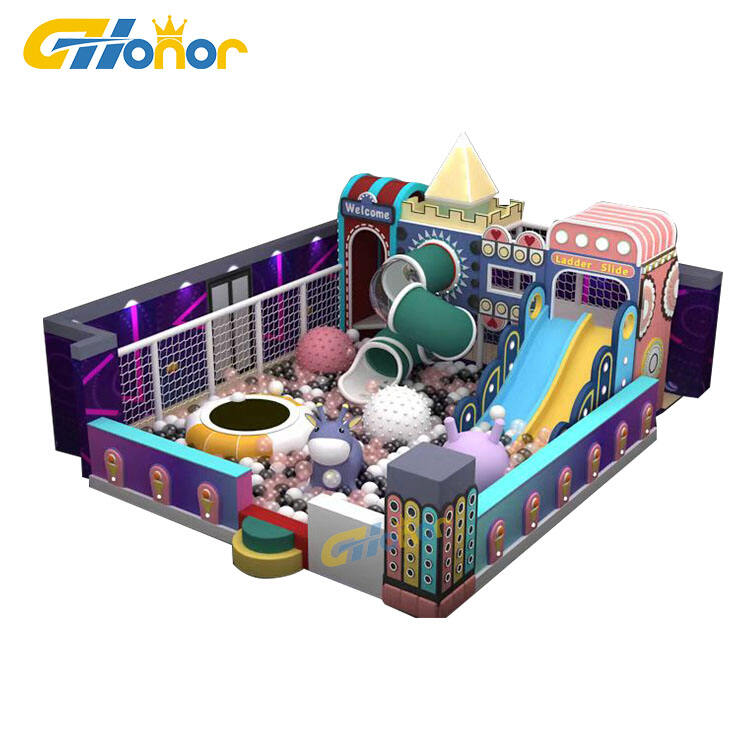
A playground for kids is a dedicated outdoor or indoor space designed to provide children with opportunities for physical activity, imaginative play, social interaction, and cognitive development through a variety of play equipment and structures. These spaces are tailored to different age groups, from toddlers to pre-teens, with equipment and layouts that cater to their evolving abilities, interests, and safety needs. Key elements of a playground for kids include age-appropriate equipment that balances challenge and safety. For toddlers (1–3 years), this means low, stable structures like small slides, climbing steps with handrails, and sensory play panels with buttons or movable parts that foster motor skill development. Preschool-aged children (3–5 years) benefit from equipment that encourages social play and coordination, such as seesaws, swings with bucket seats, and small playhouses for role-playing. School-age kids (6–12 years) thrive with more complex equipment: monkey bars, tall slides, climbing walls, and jungle gyms that build strength, agility, and problem-solving skills. Safety is integrated into every aspect, with equipment meeting international standards (ASTM, EN) to ensure sturdy construction, non-toxic materials, and impact-absorbing surfaces (rubber mulch, sand, or padded mats) beneath elevated structures to cushion falls. Layouts include clear pathways, visible supervision areas, and separation between active play zones (e.g., swing sets) and calm zones (e.g., sandbox areas) to prevent collisions. Playgrounds for kids also prioritize inclusivity, with accessible equipment for children with disabilities—such as wheelchair ramps to play structures, sensory-friendly elements, and adaptive swings—ensuring all children can participate. Design elements like colorful themes, natural features (trees, gardens), or interactive elements (water play areas, musical instruments) spark imagination and keep play engaging. These spaces serve as community hubs, where children learn to share, resolve conflicts, and explore independently, while parents or caregivers can supervise in comfortable seating areas. Whether in a park, school, or residential area, a playground for kids is more than just a play space—it’s a vital environment for childhood development and social growth.
 EN
EN