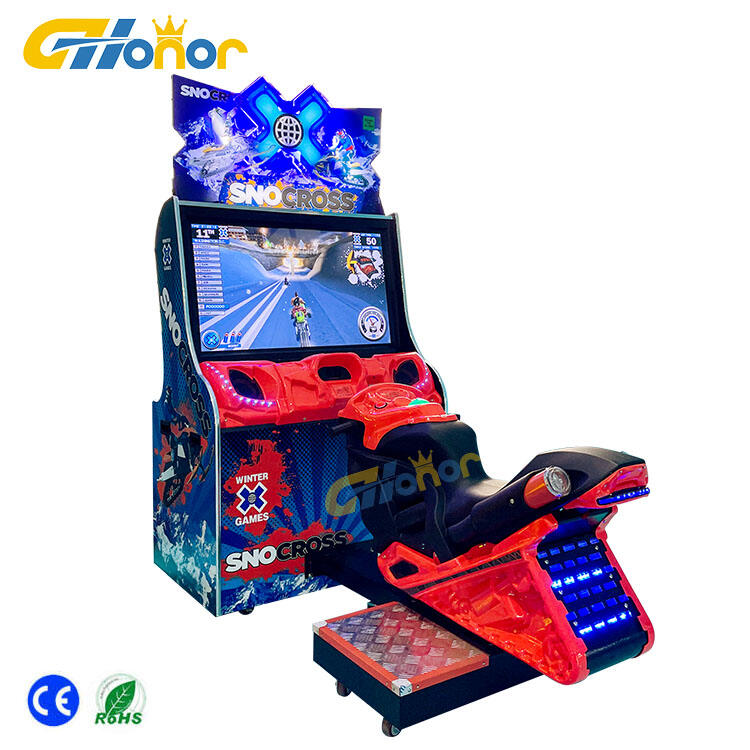
A multiplayer racing arcade machine is a specialized gaming device designed to allow two or more players to compete in racing games simultaneously, fostering social interaction, competition, and shared enjoyment in arcades, family entertainment centers, and indoor amusement parks. These machines are engineered to deliver a seamless, engaging multiplayer experience through synchronized gameplay, interactive controls, and features that enhance the thrill of racing against others. The most common configuration for multiplayer racing arcade machines is two adjacent cabinets, each with its own steering wheel, pedals, seat, and display, allowing players to sit side-by-side and race against each other on the same track. Some larger setups support up to four players, with cabinets arranged in a row or circle, creating a lively, competitive atmosphere as players cheer, strategize, and react to each other’s moves. The displays often show a split screen or shared view of the race, ensuring all players can see their position relative to others, while in-game indicators highlight opponents’ moves (e.g., a flash when someone uses a speed boost). Synchronization technology ensures that gameplay is smooth and lag-free, with all players experiencing the same race events (e.g., obstacles, power-ups) at the same time, preventing unfair advantages. This is achieved through wired connections between cabinets or local network setups that maintain precise timing. Many multiplayer racing arcade machines offer a variety of game modes to keep competition fresh, including head-to-head sprints, team races, endurance challenges, and battle modes where players can use power-ups (e.g., speed boosts, obstacles to slow opponents) to gain an edge. These modes encourage strategic play and add an element of unpredictability, making each race feel unique. Controls are designed for responsiveness and consistency across all cabinets, with identical steering wheels (with force feedback), pedals, and button layouts to ensure fair competition. Some machines include interactive features like proximity sensors that trigger in-game effects when players are close to each other (e.g., a “drafting” bonus for following closely) or sound effects that amplify the excitement of overtakes or collisions. Built with durability in mind, these machines use commercial-grade materials to withstand the energetic use common in multiplayer settings, with reinforced frames, scratch-resistant screens, and sturdy seats. They are a popular addition to arcades because they draw crowds—spectators often gather to watch races, creating a lively atmosphere—and encourage repeat play as friends return to settle scores or improve their skills. By combining competitive gameplay with social interaction, multiplayer racing arcade machines deliver an experience that is more engaging than solo play, making them a valuable asset for any entertainment venue.
 EN
EN