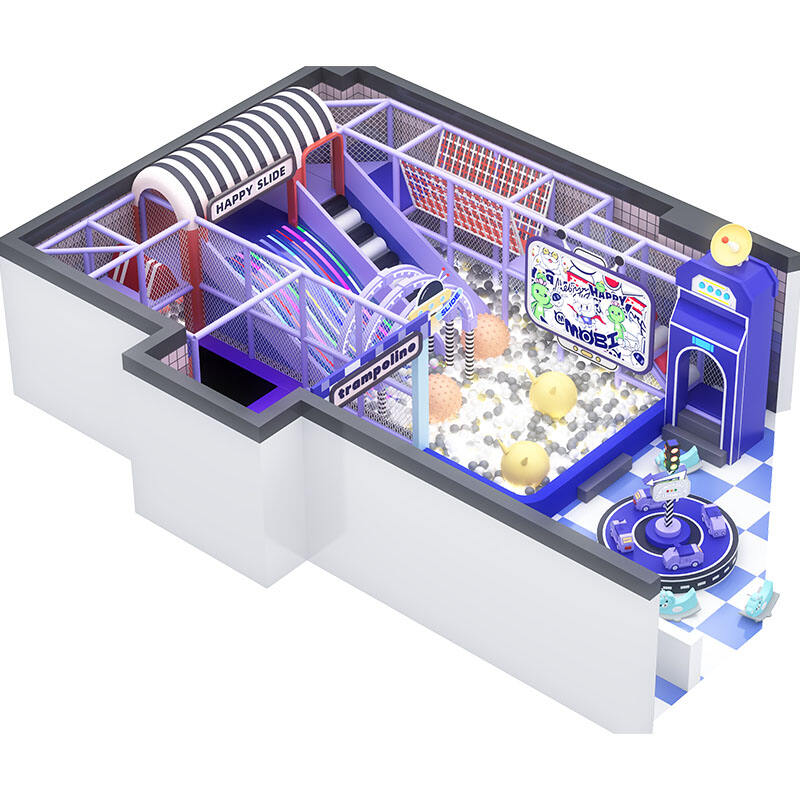
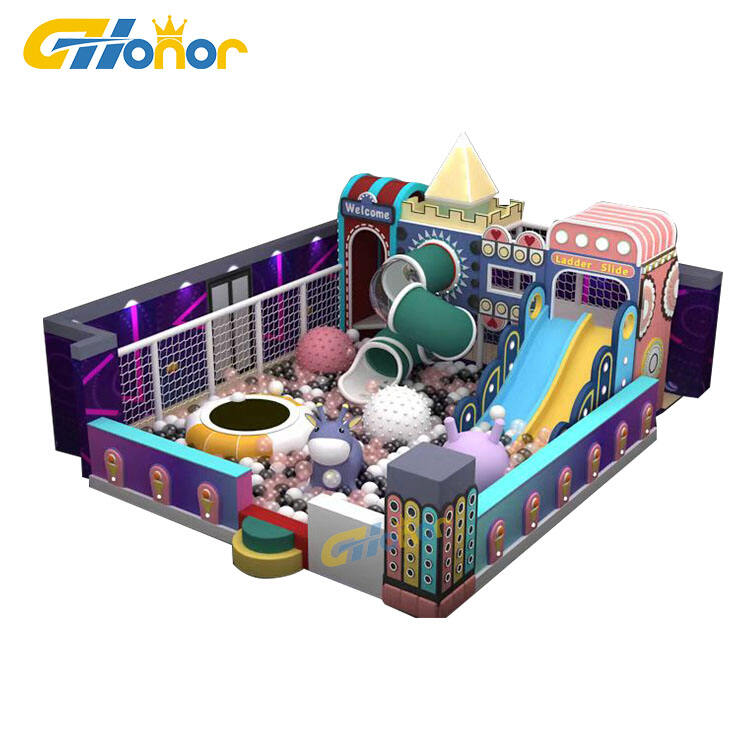
A children’s playground is a dedicated space designed specifically for children to play, explore, and interact, featuring age-appropriate equipment and structures that promote physical activity, cognitive development, social skills, and imaginative play. These playgrounds are found in parks, schools, neighborhoods, and commercial areas, tailored to different age groups (toddlers to pre-teens) and designed with safety, engagement, and inclusivity as core principles. Key elements of a children’s playground include equipment that caters to developmental stages. For toddlers (1–3 years), this means low, soft structures like padded mats, mini slides, and sensory tables that foster motor skills and exploration without risk of injury. Preschool zones (3–5 years) include small climbing structures, swing sets with bucket seats, and playhouses that encourage social interaction and role-playing. School-age areas (6–12 years) feature larger equipment—monkey bars, tall slides, climbing walls, and obstacle courses—that build strength, agility, and problem-solving abilities, with spaces for running and active games. Safety is paramount, with equipment meeting strict international standards (ASTM, EN, ISO) to ensure rounded edges, secure anchoring, and impact-absorbing surfacing (rubber mulch, foam tiles) beneath elevated structures. Layouts include clear pathways, visible supervision areas, and separation between active and passive zones to prevent collisions, while regular maintenance ensures equipment remains in safe working condition. Inclusivity is increasingly central, with design elements that accommodate children with disabilities—such as ramps for wheelchairs, adaptive swings, and sensory-friendly spaces with reduced noise and lighting. This ensures all children can participate, fostering empathy and friendship. Aesthetics and themes enhance engagement, with colorful equipment, murals, or natural elements (trees, gardens) that spark imagination. Many children’s playgrounds also incorporate educational elements, such as alphabet or number panels, to blend play with learning. By creating a safe, stimulating environment where children can play freely, a children’s playground becomes a vital space for growth, socialization, and joy.
 EN
EN