 EN
EN

The True Meaning of a ‘Full Set’ in Kids Indoor Playground Projects
For commercial real estate developers and entertainment center operators, investing in an indoor playground is a significant capital expenditure. The decision often comes down to choosing between a supplier offering a seemingly attractive “full set” package and taking a fragmented, do-it-yourself approach. However, the term “full set” can be dangerously misleading. In the playground equipment industry, a genuinely complete solution extends far beyond a pile of slides and plastic components. It represents a fully engineered, safety-certified, and operationally ready ecosystem. Without a comprehensive understanding of what a true turnkey system includes, operators frequently find themselves facing unexpected costs, regulatory delays, and safety liabilities. Understanding the seven essential components of a real full-set playground is the first step toward making a sound financial and operational decision.
Building the Core with a Multi-Level Play Structure
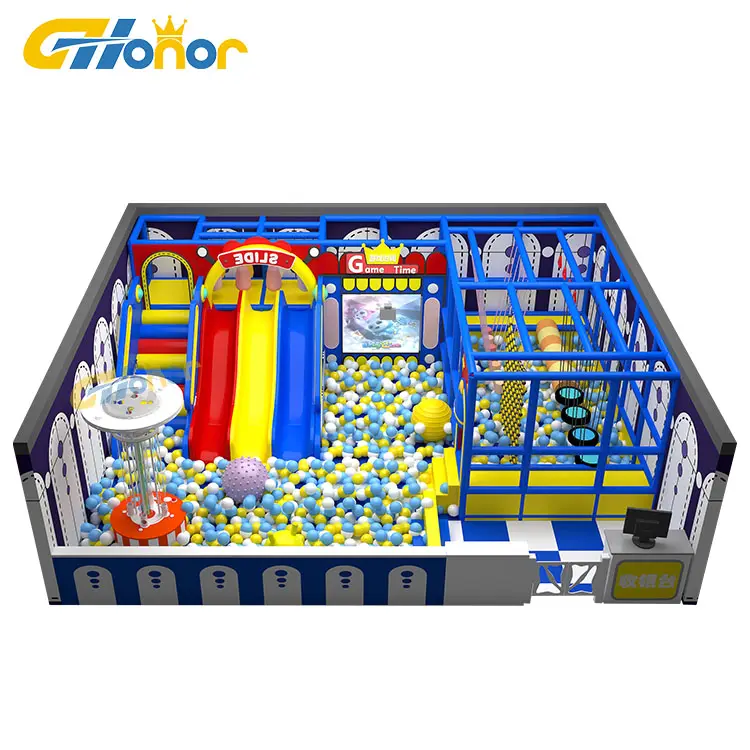
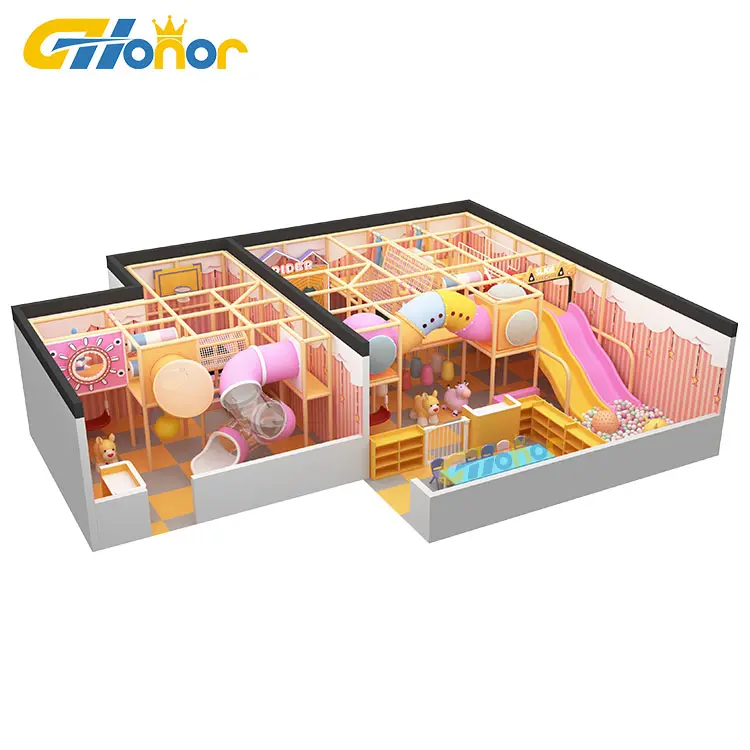
The heart of any successful indoor playground is the main multi-level play structure. This large, interconnected maze serves as the physical anchor for the entire facility. It typically features a combination of slides, tunnels, climbing decks, and connecting bridges designed to challenge gross motor skills and encourage prolonged physical activity. A well-designed core structure is not just a collection of random parts; it is a carefully architected journey where children can move fluidly from one challenge to the next. The structural integrity of this frame is critical. It must be built from durable, non-toxic materials and precisely engineered to handle the constant stress of running, jumping, and swinging.
Creating a Safe Haven with a Dedicated Soft Play Area
While older children thrive on the excitement of the main structure, toddlers require a completely different environment. A dedicated soft play area is an essential, non-negotiable module. This lower-height zone is specifically engineered for children under five years old. It features gentle foam shapes, miniature slides, and sensory elements designed to be safe and engaging. Because toddlers are still developing their balance and coordination, the risk of a hard fall must be virtually eliminated. This zone is typically isolated from the high-energy areas and is equipped with specialized impact-absorbing flooring to ensure that falls do not result in injury. By dedicating a separate space to the youngest visitors, operators demonstrate a strong commitment to safety across all age groups.
Encouraging Cognitive Growth with Interactive Play Panels
Physical activity is only half the equation of a healthy play experience. Interactive play panels are critical components that support early cognitive development. These wall- or post-mounted units are designed to teach cause-and-effect relationships, basic numbers, letters, and sounds. They hold the attention of children who may be taking a break from running and climbing, providing a quiet but stimulating activity. These panels must be durable enough to withstand frequent use and interactive enough to genuinely engage a child's curiosity. When integrated into the overall design, they transform the playground from a purely physical outlet into a space that also nurtures developing brains.
Providing Immersive Tactile Stimulation with an Enclosed Ball Pit
Few things are as universally beloved by children as jumping into a ball pit. An enclosed, well-ventilated ball pit provides a safe, contained environment for tactile stimulation. However, this module requires strict maintenance. The balls must be clean, age-appropriate, and regularly sanitized. A properly designed ball pit is not just a fun attraction; it is a trust signal to parents that the operator takes hygiene seriously. The structure around the pit must also be fully padded and designed to prevent children from climbing out in an unsafe manner. When properly maintained, the ball pit becomes one of the most popular and repeatable attractions in the entire facility.
Building Strength and Coordination with Climbing Components
To cater to older, more adventurous children, a true full-set playground must include robust climbing components. Rope nets, rock walls, stepping stones, and cargo nets provide a higher level of physical challenge. These elements build upper body strength, improve coordination, and enhance spatial awareness. Because these components test the limits of a child’s physical abilities, they must be securely anchored and constructed from high-tensile materials that will not fray or break under stress. Properly integrated climbing zones keep older children engaged and challenged, preventing the boredom that often leads to unsafe behavior in playgrounds.
Fostering Imagination with Themed Role-Play Zones
Children do not just run and climb; they also play pretend. Themed role-play zones offer immersive, scaled environments that foster language development, social negotiation, and imaginative storytelling. Whether it is a miniature fire station, a grocery store, or a veterinary clinic, these zones allow children to act out real-world scenarios. This type of play is crucial for cognitive and social development. It helps children understand the world around them, build vocabulary, and learn how to interact cooperatively with peers. Including these diverse themed zones ensures the playground offers a rich variety of experiences that appeal to different interests and personalities.
The Foundation of Safety: Impact-Absorbing Flooring
Perhaps the most overlooked, yet most critical, module is the impact-absorbing safety flooring. This is not simply the existing floor of the building. It must be seamless, certified surfacing, such as poured-in-place rubber or interlocking high-density foam tiles, installed across the entire play footprint, not just directly beneath the equipment. This flooring is tested to specific fall-height ratings. Without this certified surface, a fall from even a moderately high platform can result in severe injury. Suppliers who cut corners by excluding this flooring from a “full set” quote are leaving the operator with a serious and expensive liability.
The Danger of Unbundled Anchoring and Safety Certification
Many suppliers will offer a lower price by “unbundling” critical components. Anchoring systems, such as heavy-duty bolts, floor plates, and structural tie-downs, are frequently excluded from the initial quote. This leaves the operator to source them separately, or worse, to install equipment without secure fastening. An unanchored structure poses an immediate tipping hazard. Similarly, third-party safety certification documentation is often missing. A true turnkey solution must include test reports verifying compliance with recognized standards for structural integrity, entrapment prevention, and material toxicity. Without these documents, the facility cannot pass municipal inspections or secure liability insurance. When these foundational items are unbundled, the buyer is not receiving a complete system; they are receiving an incomplete assembly that requires costly, time-consuming retrofitting.
How Vertical Integration Protects the Project Timeline
Given the complexity of these seven modules, working with a vertically integrated manufacturer offers a distinct advantage. When a single factory controls the CAD design, metal fabrication, foam molding, and installation, the fragmentation of the supply chain is eliminated. The design and manufacturing process is synchronized, preventing the compatibility issues that arise when components are sourced from multiple vendors. The factory’s own trained crews install the equipment, ensuring that every bolt and panel matches the original engineering specifications. This end-to-end control drastically reduces the risk of project delays and cost overruns. A project that might take twenty weeks to coordinate with a distributor and multiple subcontractors can often be completed within a much tighter window when managed through a single, disciplined factory.
How Reliable Manufacturing Guarantees Long-Term Quality
Ultimately, the safety and longevity of a playground depend on the manufacturing process behind it. The precision of the laser cutting, the thickness of the powder coating, and the uniformity of the foam molding all determine how well the equipment will survive years of continuous use. Manufacturers who adhere to recognized quality management systems, such as ISO 9001, subject every production batch to rigorous stress testing and dimensional verification. For a developer who relies on the playground to attract families and drive retail traffic, partnering with a supplier that demonstrates transparent sourcing and disciplined production standards provides the ultimate confidence in the investment.