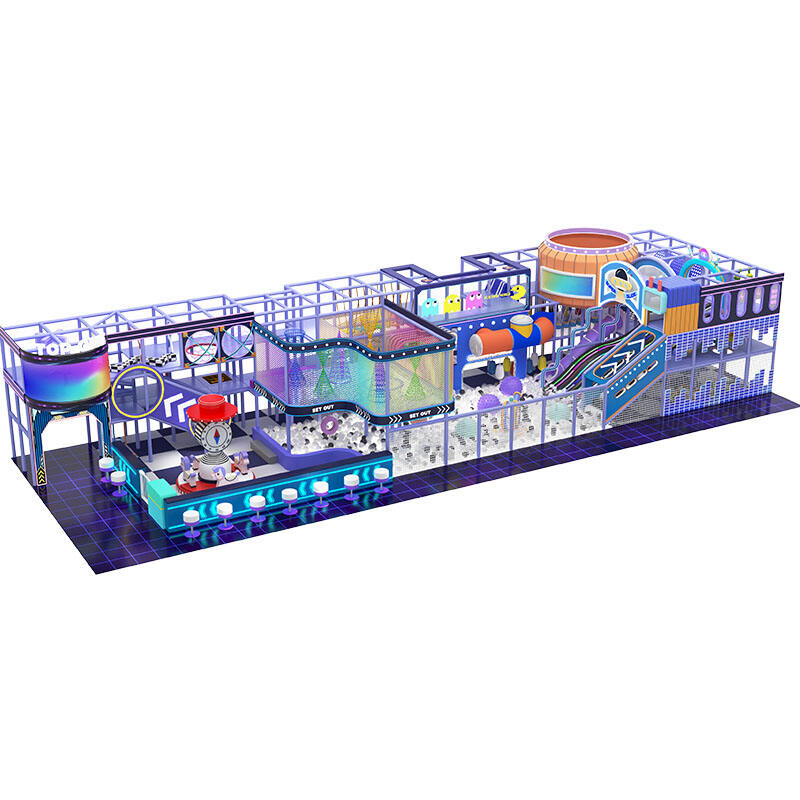
VR for indoor playgrounds refers to the integration of virtual reality technology into indoor play spaces, offering children and families immersive, interactive experiences that combine physical activity with digital exploration, enhancing traditional playground offerings with cutting-edge entertainment. These VR solutions are designed to be safe, engaging, and age-appropriate, transforming indoor playgrounds into dynamic environments that cater to tech-savvy audiences while promoting curiosity and active play. VR experiences in indoor playgrounds are tailored to different age groups, with content ranging from gentle, educational simulations for young children to more adventurous games for older kids. For toddlers and preschoolers, VR might involve interactive storybooks where they “explore” a digital zoo or garden by moving their heads, with simplified controls and vibrant, non-threatening visuals. Older children can enjoy multiplayer games that require physical movement—like virtual obstacle courses where they jump, duck, or reach to interact with digital elements, blending the physicality of traditional play with the excitement of virtual worlds. Hardware is designed for safety and ease of use, with lightweight VR headsets that fit comfortably on children, adjustable straps to ensure a secure fit, and durable, easy-to-clean materials. Many setups use standalone headsets (no wires) to prevent tripping hazards, or fixed stations with protective barriers to keep players within safe zones. Some experiences incorporate motion sensors or haptic feedback devices (like vibrating gloves or floor pads) to enhance immersion, letting kids “feel” virtual objects or environments. Integration with existing playground elements is common, with VR stations positioned near traditional play areas to encourage a mix of activities—children might alternate between climbing a physical structure and exploring a virtual one, preventing over-reliance on screens. Operators often limit VR session durations (10–15 minutes) to balance digital and physical play, protect eyesight, and manage lines. Educational elements are frequently woven into content, with VR experiences teaching about science, geography, or teamwork, aligning with parents’ desire for enriching entertainment. By adding VR, indoor playgrounds differentiate themselves from competitors, attract tech-interested families, and provide unique experiences that encourage repeat visits, making it a valuable investment in modernizing play spaces.
 EN
EN