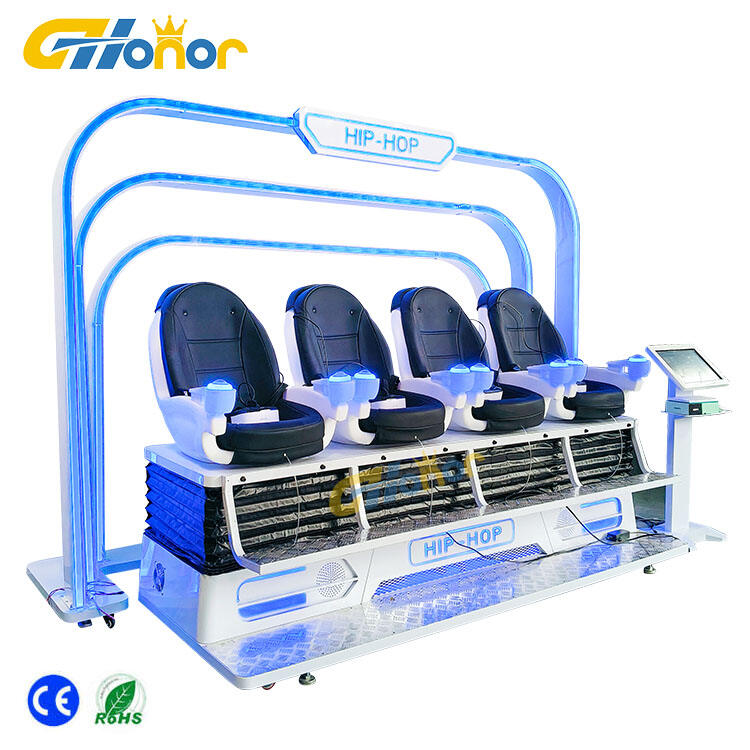
A VR arcade machine is a commercial gaming device designed for public entertainment venues such as arcades, family entertainment centers, and shopping malls, offering immersive virtual reality gaming experiences through a combination of VR headsets, motion tracking, interactive controllers, and often physical feedback systems. These machines are built to withstand heavy use, attract a wide range of players, and deliver engaging, short-duration experiences that keep customers coming back. VR arcade machines vary in design but typically feature a dedicated play area, which may be a enclosed booth, a platform with safety barriers, or a free-roam space, depending on the game. The core hardware includes a high-quality VR headset that delivers 3D visuals with low latency, ensuring a smooth, immersive view of the virtual game world. Motion tracking systems—either built into the headset or using external sensors—accurately detect the player’s head and body movements, translating them into in-game actions (e.g., moving forward, turning, or ducking). Handheld motion controllers allow players to interact with virtual objects, whether firing a weapon, solving a puzzle, or driving a vehicle, making the gameplay active and intuitive. Many VR arcade machines include additional features to enhance immersion, such as motion platforms that tilt, vibrate, or rotate in sync with gameplay (e.g., simulating a roller coaster’s drops or a car’s turns), haptic feedback (vibrating gloves, vest pads) that mimics the feel of virtual impacts or textures, or environmental effects like wind or light changes that correspond to in-game events. These elements work together to create a multi-sensory experience that feels more realistic than traditional arcade games. The games offered on VR arcade machines are designed for short, intense sessions (typically 5–15 minutes), catering to the arcade model of quick, pay-per-play entertainment. They range from action games and racing simulations to puzzle challenges and social multiplayer experiences where players can compete or collaborate with others in the same virtual space. Commercial viability is a key design focus, with features like easy-to-use interfaces that minimize staff assistance, multiple payment options (coin, card, mobile), and quick reset times between players to maximize throughput. The machines are built with durable materials—reinforced headsets, rugged controllers, and sturdy platforms—to withstand constant use and occasional rough handling. With their ability to offer experiences that can’t be replicated at home, VR arcade machines have become popular attractions, drawing in players with the promise of unique, immersive fun.
 EN
EN