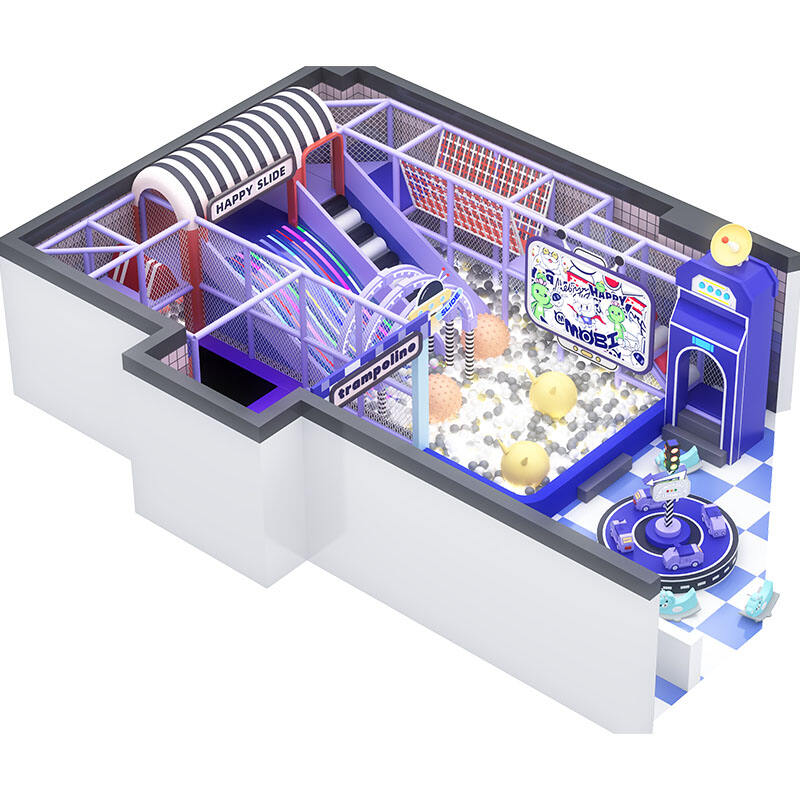
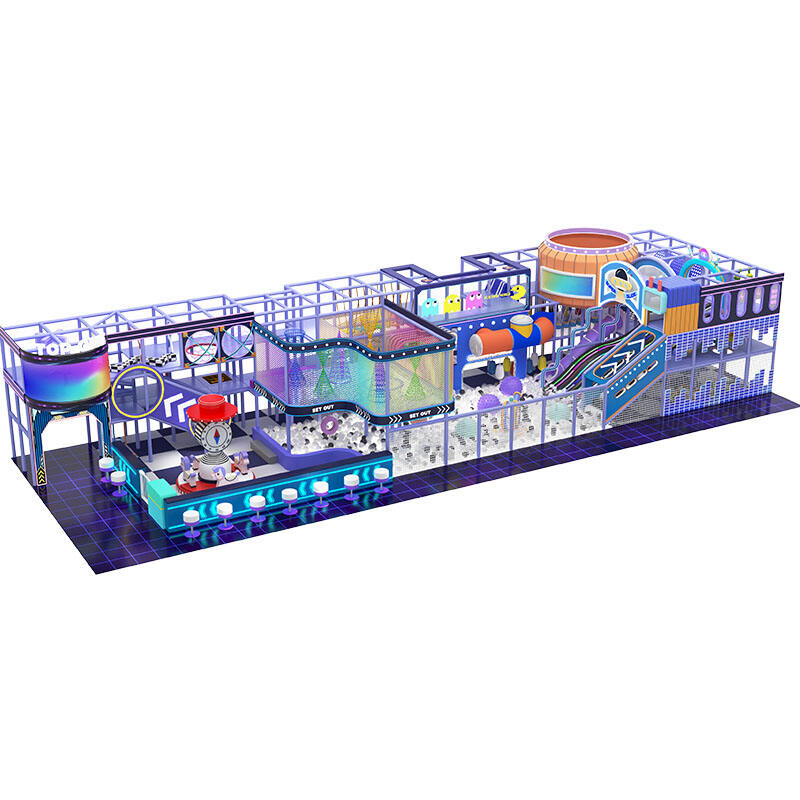
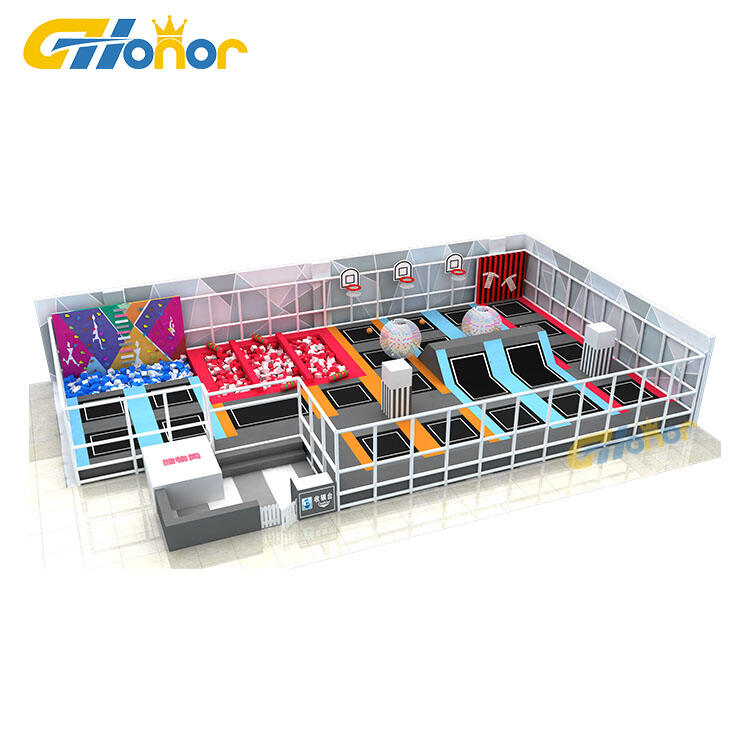
Indoor amusement park layout refers to the strategic arrangement of attractions, amenities, and spaces within an indoor amusement facility, designed to optimize traffic flow, enhance visitor experience, ensure safety, and maximize the use of available space. A well-planned layout considers factors such as age-specific zones, sightlines for supervision, accessibility, and the logical flow of activities, creating a cohesive environment that is easy to navigate and enjoyable for all visitors. A key principle of indoor amusement park layout is zoning by age and activity type, which minimizes conflicts between different groups of visitors and ensures that each area caters to specific needs. For example, a dedicated toddler zone (1–3 years) with soft play structures and low-key activities is positioned away from high-energy areas for older children (6–12 years) with climbing walls or arcade games, reducing noise and collision risks. A family zone with multiplayer games or seating areas serves as a central hub where different age groups can interact. Traffic flow is carefully designed to prevent congestion, with wide, clear pathways that connect zones without dead ends. Main thoroughfares are positioned to guide visitors through the park, with secondary paths branching off to specific attractions. High-traffic areas, such as entrance/exit points, restrooms, and snack bars, are placed strategically to avoid bottlenecks—for example, restrooms are located near multiple zones for convenience, while snack bars are positioned in transitional areas to encourage impulse purchases. Sightlines are a critical safety consideration, with open layouts that allow parents and staff to monitor children from a distance. Tall structures or dense attractions are placed to avoid blocking views, ensuring that no area is hidden from supervision. Seating areas are positioned throughout the park, particularly near children’s play zones, to provide rest spots for parents while keeping them close to their kids. Accessibility is integrated into the layout, with wide pathways (minimum 3 feet) to accommodate strollers and wheelchairs, ramps to elevated attractions, and accessible restrooms. Emergency exits are clearly marked and unobstructed, with routes designed to allow quick evacuation if needed. The layout also considers operational efficiency, with staff areas (storage, break rooms) positioned near attractions for easy maintenance and supervision, and utility connections (electrical, plumbing) planned to support equipment like arcade machines or water features without disrupting visitor areas. Thematic elements can enhance the layout, with pathways designed to “lead” visitors through a narrative—for example, a jungle-themed park might have winding paths that simulate a safari trail, connecting animal-themed attractions. By balancing functionality, safety, and visitor experience, a well-designed indoor amusement park layout ensures that the space is not only efficient but also enjoyable, encouraging visitors to explore all areas and stay longer.
 EN
EN