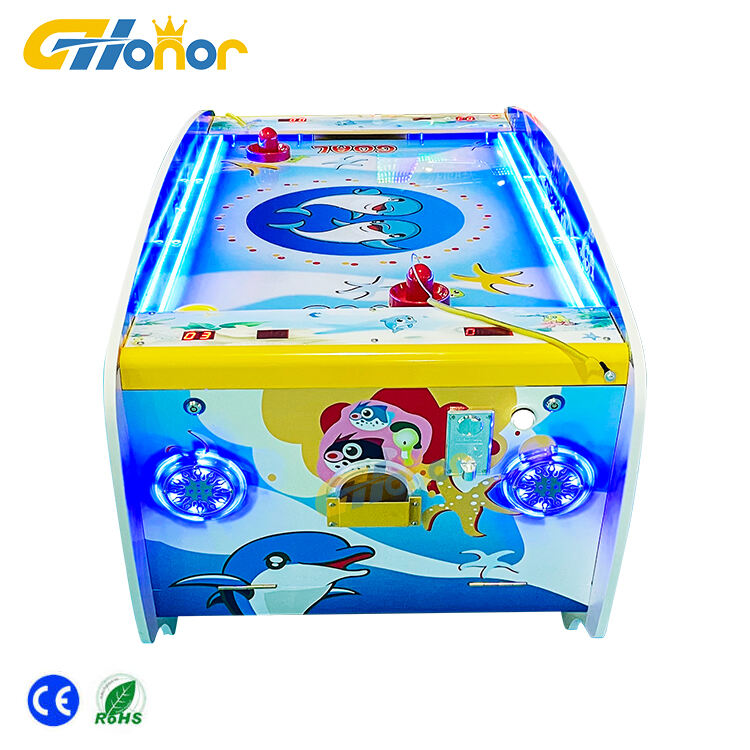
An air hockey table is a gaming device designed for two or more players to compete in a fast-paced, skill-based game where players use mallets (strikers) to hit a lightweight puck across a smooth, air-cushioned surface, aiming to score goals in the opponent’s net. The table’s defining feature is its air system, which generates a thin cushion of air to reduce friction, allowing the puck to glide quickly and smoothly, creating a dynamic and exciting gameplay experience suitable for all ages. The basic structure of an air hockey table includes a flat playing surface—typically rectangular in shape—with a border of raised rails that keep the puck in play. The surface is perforated with thousands of tiny holes, connected to an electric motor and blower system underneath. When activated, the blower forces air through these holes, creating a frictionless layer that enables the puck to float and move at high speeds. The playing surface is made from materials like acrylic, tempered glass, or high-density fiberboard (HDF) with a scratch-resistant coating, ensuring durability and a consistent glide. At either end of the table, a goal (a rectangular opening) is recessed into the surface, with a net or collection area to catch the puck when a goal is scored. Scoring systems vary: basic models use manual slide counters or scorekeepers, while advanced tables feature electronic LED displays that automatically track goals using sensors positioned near the goals. Some electronic systems also include sound effects for goals or game end, enhancing the immersive nature of the game. The frame and legs of an air hockey table provide stability and support, with materials ranging from lightweight aluminum (for portable models) to heavy-gauge steel or solid wood (for commercial or tournament-grade tables). Legs often include adjustable levelers to ensure the table is perfectly flat—critical for fair play, as an uneven surface can cause the puck to drift. Rails along the edges of the playing surface are made from high-impact plastic or aluminum, with rounded edges to withstand repeated puck impacts and redirect the puck back into play. Air hockey tables come in various sizes to suit different spaces and uses. Full-size tables, measuring 8 feet long and 4 feet wide, are standard in arcades and tournament settings, offering ample space for competitive play. Compact tables, ranging from 4 to 6 feet long, are designed for home use, fitting in game rooms, basements, or even apartments. Portable or foldable models prioritize space efficiency, with lightweight frames that can be stored when not in use. Accessories such as mallets and pucks are essential for gameplay. Mallets consist of a circular base (weighted for stability) and a handle, with rubber or plastic bases that grip the surface without damaging it. Pucks are small, flat discs made from durable materials like Lexan or high-impact plastic, designed to withstand collisions and glide smoothly over the air cushion. Whether used in arcades, homes, or recreation centers, an air hockey table provides a social, competitive experience that combines skill, reflexes, and strategy, making it a timeless form of entertainment.
 EN
EN