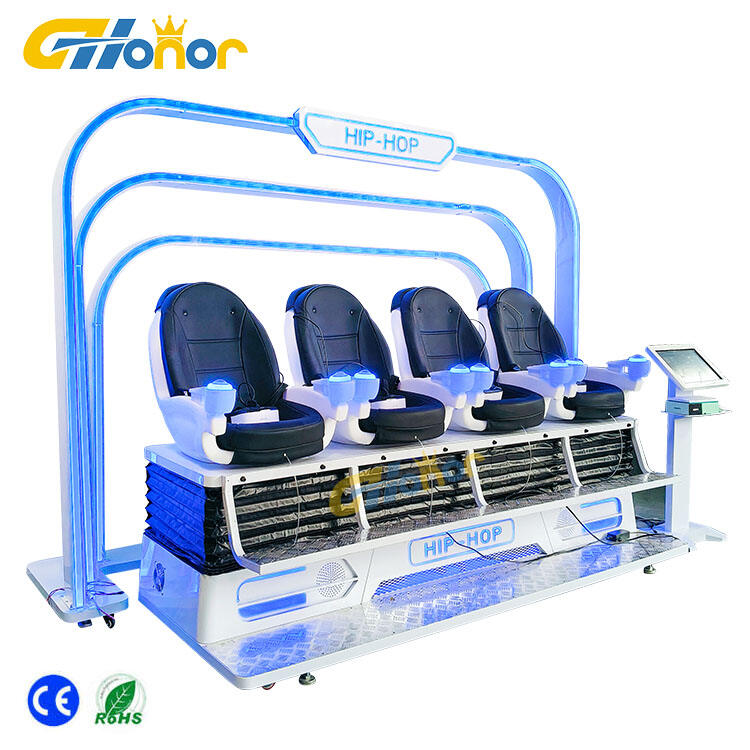
A 9D VR simulator is an advanced multi-sensory virtual reality system that goes beyond basic VR by integrating motion, environmental effects, interactive controls, and sometimes even full-body tracking to create an ultra-immersive experience, engaging users on physical, visual, auditory, and tactile levels. The “9D” designation typically refers to the combination of multiple dimensions of sensory input and interaction, designed to make users feel completely present in the virtual environment, with little distinction between the digital and physical worlds. Central to a 9D VR simulator is a sophisticated motion platform, which can be a seat, pod, or even a full-body harness system that moves in multiple axes—tilting, rotating, lifting, and vibrating in precise synchronization with the virtual content. This motion simulates actions like flying, falling, driving, or floating, with realistic acceleration and deceleration that matches the virtual scenario, whether it’s a roller coaster ride, a spacewalk, or a deep-sea dive. Visuals are delivered via high-resolution VR headsets with a wide field of view and low latency, ensuring that the virtual world appears sharp, smooth, and responsive to head movements. Spatial audio speakers, often built into the headset or surrounding the user, provide directional sound that enhances immersion—voices, engine noises, or environmental sounds appear to come from specific directions in the virtual space. Environmental effects add layers of sensory input, including wind, water sprays, heat, cold, and scents that correspond to the virtual environment, while haptic feedback in gloves or suits lets users “feel” virtual objects—texture, weight, or impact—when they reach out to touch them. 9D VR simulators often include advanced interaction, with motion-tracked controllers or full-body sensors that translate real movements into virtual actions, allowing users to climb, grab, throw, or fight in the virtual world with natural gestures. Many support multiplayer experiences, where multiple users in separate simulators can interact in the same virtual space, collaborating or competing in games and adventures. These simulators are found in high-end arcades, theme parks, and entertainment centers, offering cutting-edge experiences that appeal to tech enthusiasts and thrill-seekers. They are built with commercial durability, using heavy-duty materials for motion components, headsets, and effect generators to handle continuous use. With content ranging from adrenaline-pumping adventures to educational explorations, 9D VR simulators represent the pinnacle of immersive entertainment, blurring the line between reality and virtuality.
 EN
EN