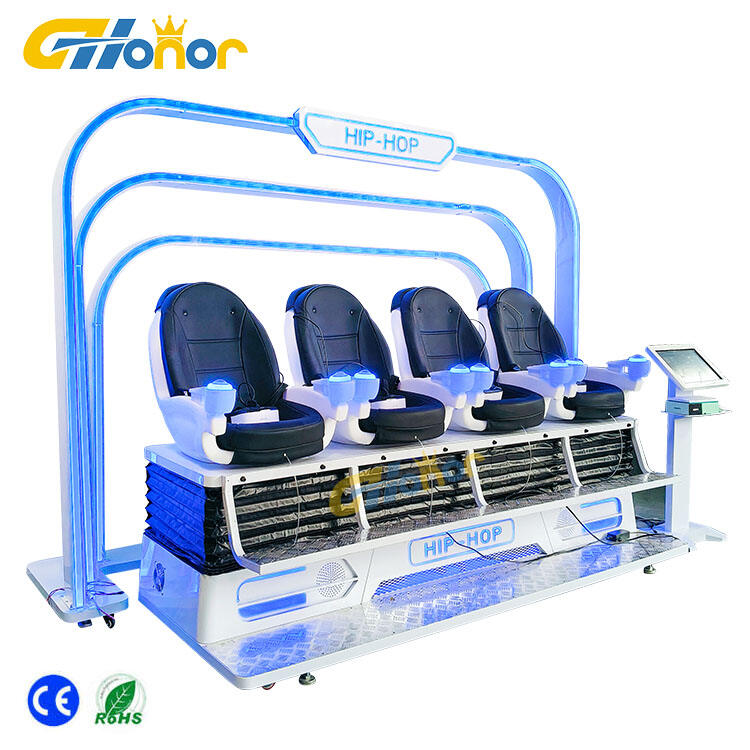
A 5D VR simulator is an advanced entertainment system that combines virtual reality (VR) technology with physical effects to create a multi-sensory experience, engaging sight, sound, touch, motion, and sometimes smell to immerse users in a virtual environment. This “5D” designation refers to the integration of 3D visuals, dynamic motion, environmental effects, and interactive elements, going beyond traditional VR to create a more comprehensive and realistic experience. At the core of a 5D VR simulator is a VR headset that delivers high-resolution 3D visuals, transporting users to virtual worlds such as roller coasters, space adventures, or natural landscapes. This visual immersion is paired with a motion platform—often a seat or cabin—that moves in sync with the virtual content, simulating movements like tilting, spinning, vibrating, or jolting to match actions in the virtual environment (e.g., accelerating, falling, or crashing). Environmental effects enhance the sensory experience further, including wind blasts (to simulate speed), water sprays (for rain or ocean scenes), air scents (like pine for a forest or fuel for a race track), and even leg ticklers or back pokers to mimic physical interactions with virtual objects. These effects are timed precisely with the visuals and motion to create a cohesive experience where every sensory input reinforces the virtual scenario. 5D VR simulators often feature interactive elements, such as controllers that allow users to interact with virtual objects or make decisions that affect the outcome of the experience, adding a layer of engagement beyond passive viewing. Many are designed for small groups, with multi-seat cabins that let friends or family members share the experience, enhancing the social aspect of the entertainment. These simulators are commonly found in amusement parks, arcades, shopping malls, and tourist attractions, offering short, intense experiences (typically 5–10 minutes) that cater to casual users seeking thrills. They are built with commercial durability in mind, using robust materials for seats, motion mechanisms, and effect generators to withstand heavy use. The content is regularly updated to include new scenarios, ensuring repeat visits from customers. By combining VR with motion, environmental effects, and interaction, 5D VR simulators create a fully immersive experience that engages more senses than traditional media, making them a popular and memorable form of entertainment.
 EN
EN