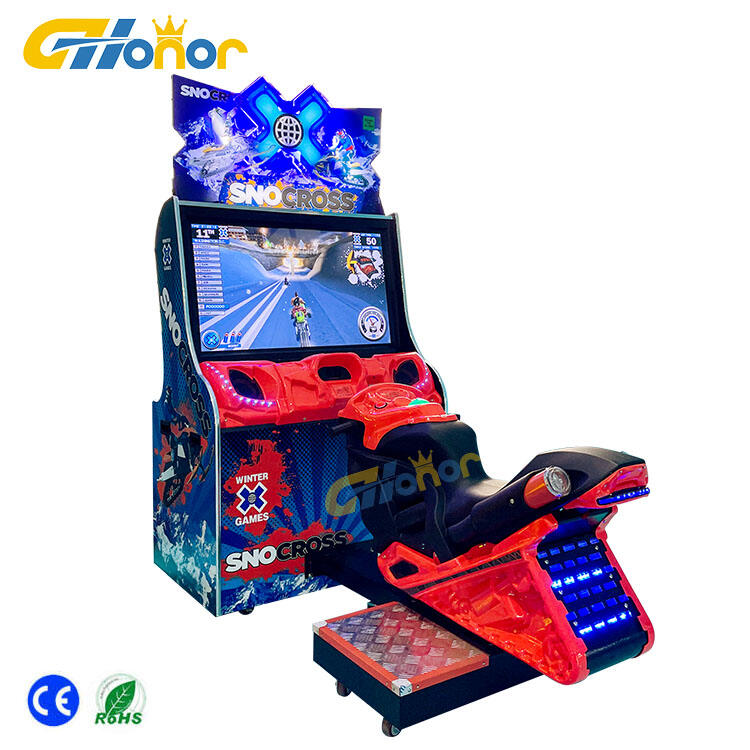
A 3D racing arcade machine is an advanced gaming device that uses three-dimensional graphics and immersive technology to create a realistic, visually stunning racing experience, allowing players to feel as if they are actually driving on the track through lifelike visuals, dynamic perspectives, and responsive controls. These machines are designed to push the boundaries of arcade entertainment, combining cutting-edge display technology with engaging gameplay to attract players of all ages. At the core of a 3D racing arcade machine is its high-definition 3D display, which can be a large, curved screen, multiple synchronized screens, or even a wraparound display that creates a panoramic view. This display renders race tracks, vehicles, and environments in three dimensions, with depth, texture, and detail that make distant objects appear smaller, curves look natural, and obstacles seem to pop out, enhancing the sense of realism. The 3D effect is often complemented by stereoscopic technology or compatibility with 3D glasses (in some models), further intensifying the illusion of depth. To complement the visuals, these machines feature advanced physics engines that simulate realistic vehicle movement—cars lean into turns, tires lose traction on wet surfaces, and collisions have tangible effects on speed and control—making the gameplay feel responsive and authentic. The steering wheel, equipped with force feedback, provides tactile sensations that match the on-screen action, such as resistance when turning sharply or vibrations when driving over rough terrain, creating a multi-sensory experience. 3D racing arcade machines offer a variety of tracks and vehicles, from realistic replicas of famous race circuits and sports cars to fantasy tracks with jumps, loops, and futuristic vehicles, all rendered in vivid 3D. Many models include dynamic weather and time-of-day effects—rain that makes the track slippery, sunlight that creates glare, or night races with headlights illuminating the way—adding variety and challenge to the gameplay. Multiplayer functionality is common, allowing two players to race head-to-head in adjacent 3D machines, with split-screen or linked displays that keep both players’ perspectives in 3D, maintaining immersion even during competitive play. The cabinet design often includes additional features like motion seats that tilt or vibrate with the action, surround sound speakers that deliver directional audio (e.g., the sound of an opponent approaching from behind), and LED lighting that syncs with in-game events (e.g., flashing when using a speed boost). Built with durability for commercial use, these machines combine high-tech components with sturdy construction, ensuring they can handle heavy use in arcades and entertainment centers. By leveraging 3D technology, these machines create an experience that is more immersive and engaging than traditional 2D racing games, making them a standout attraction in any arcade.
 EN
EN